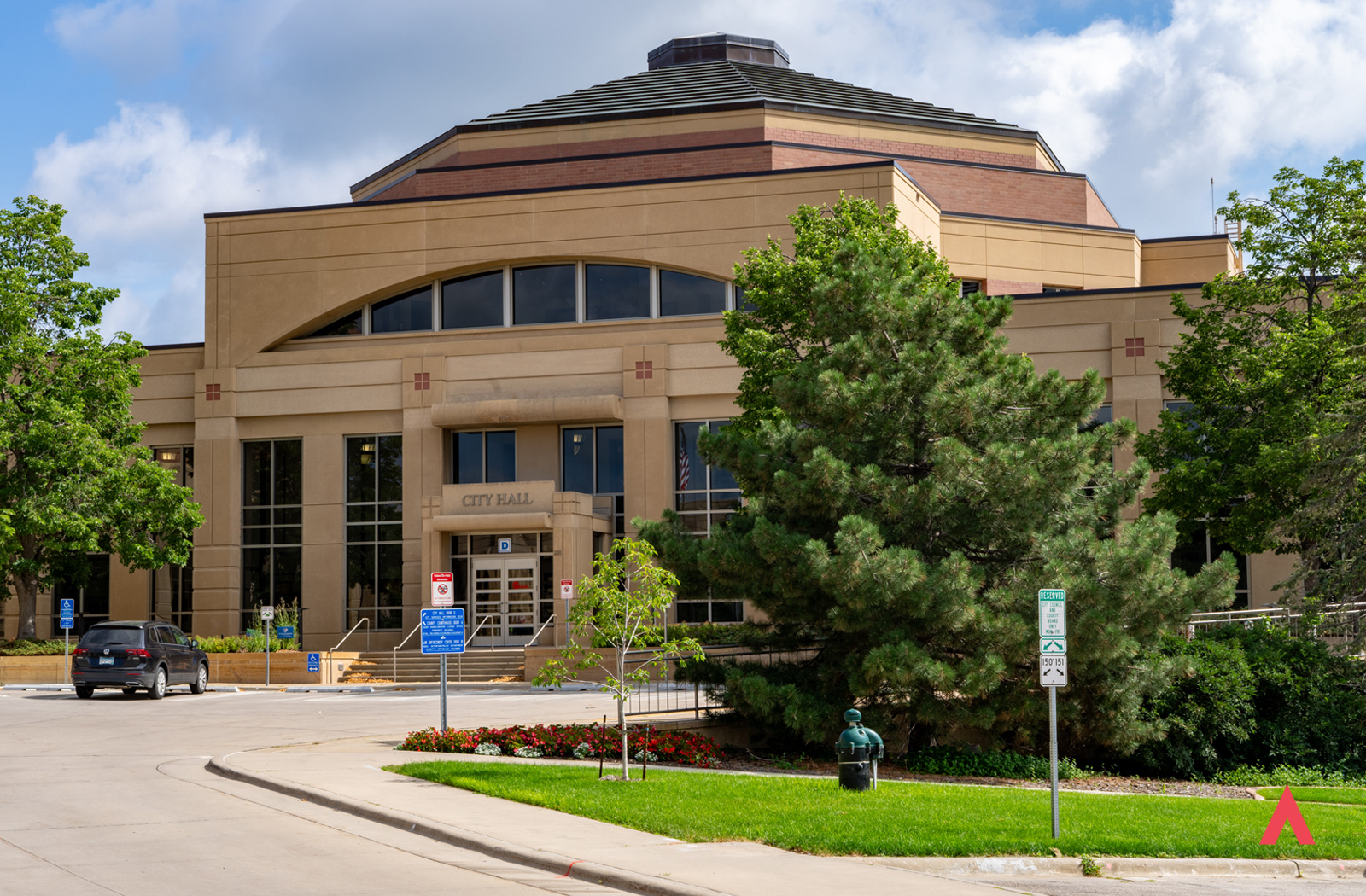
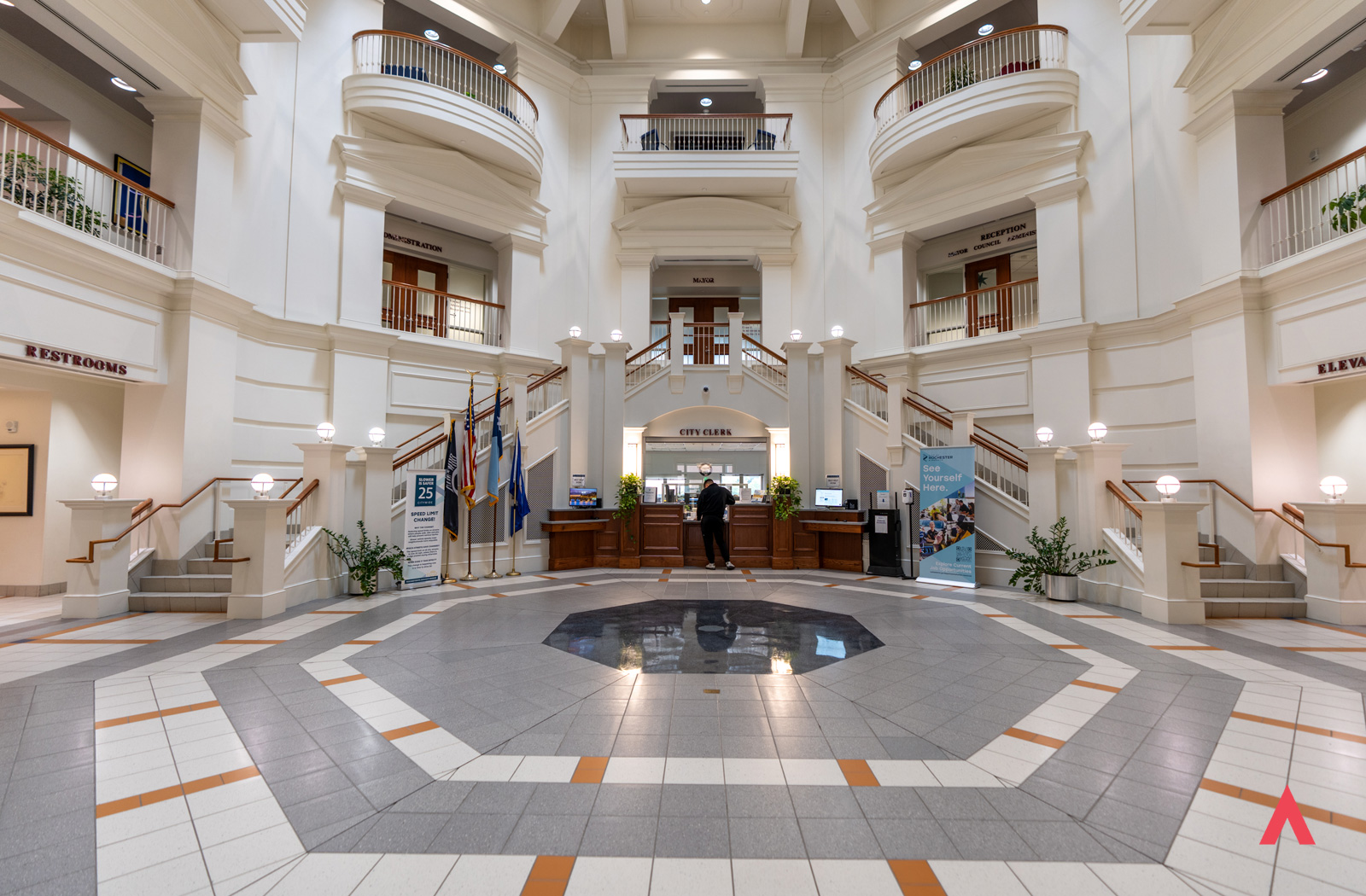
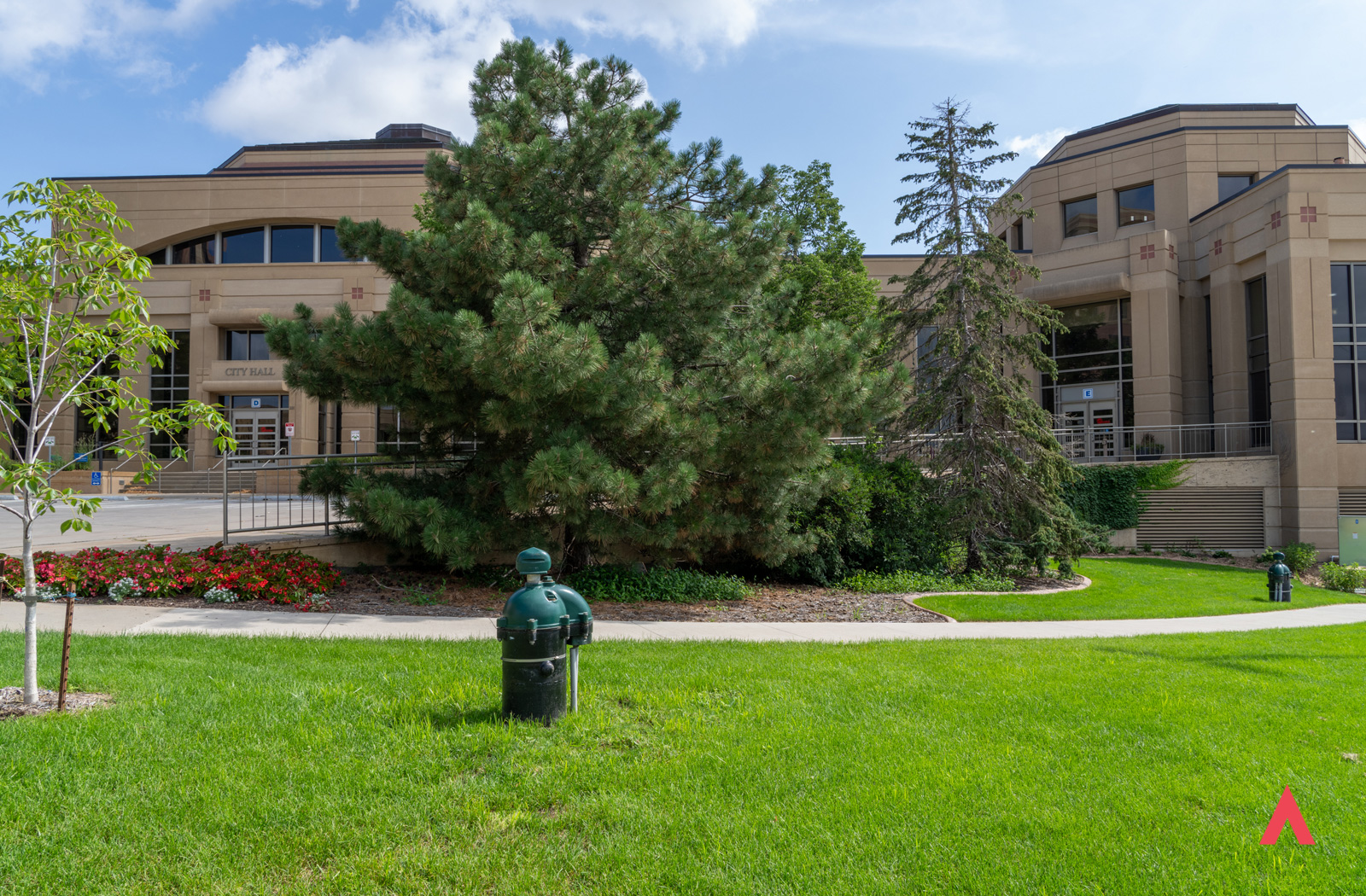
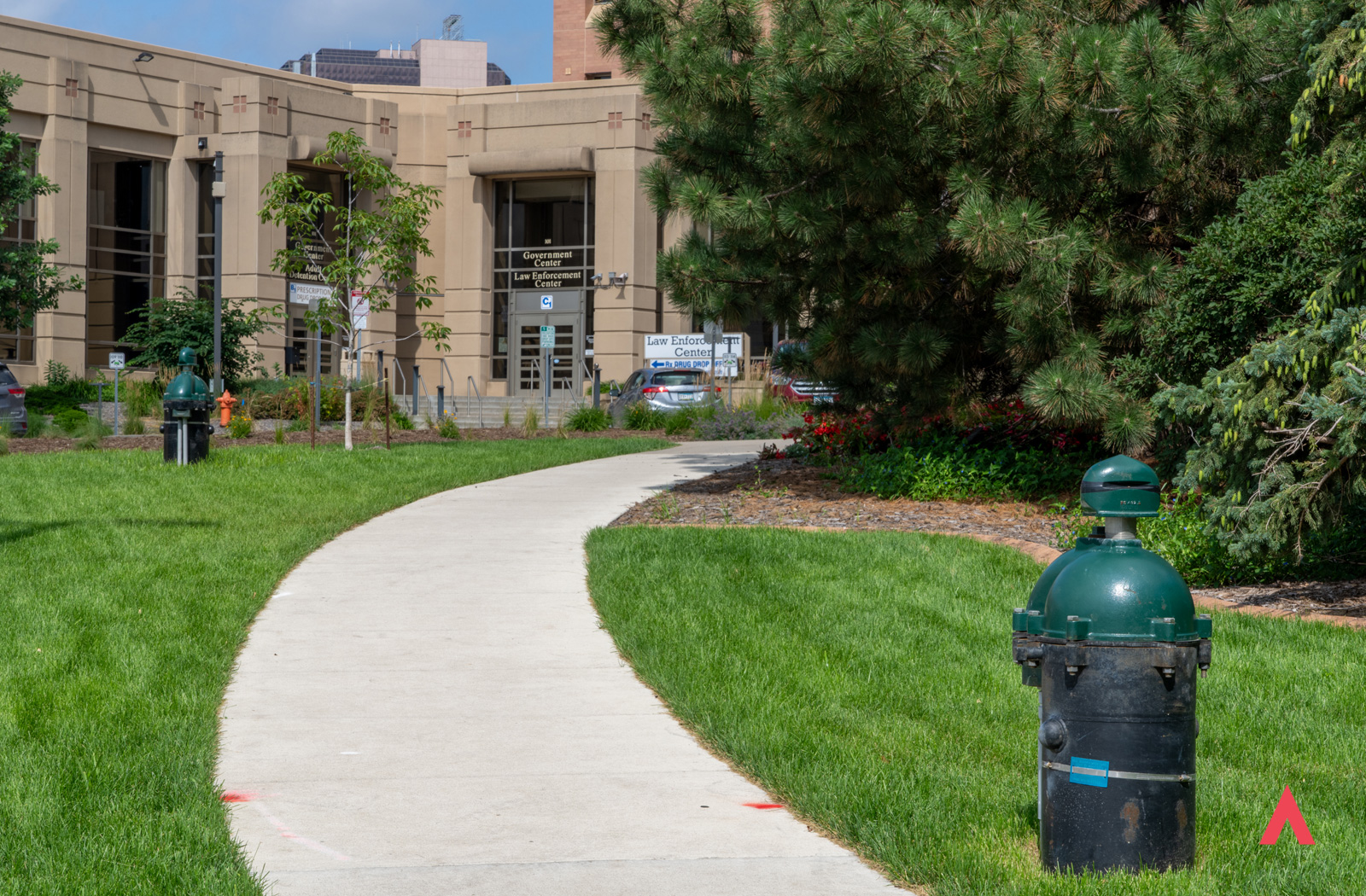
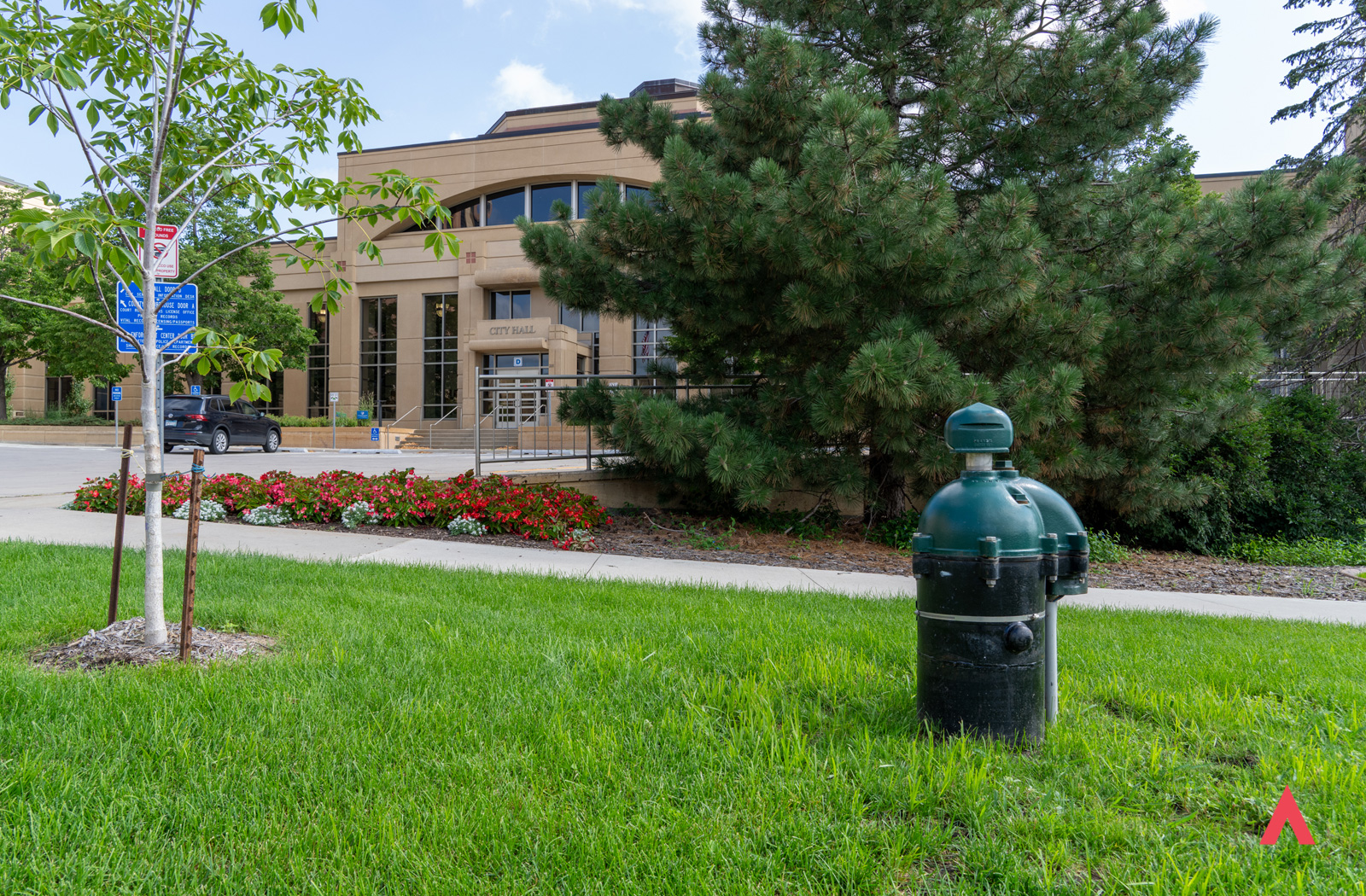
Rochester City Hall was originally constructed between 1885 and 1889 as a federal courthouse and post office. Today, it serves as both a civic landmark and as the headquarters of city government. Its council chambers, administrative offices, and public service departments all sit inside the building that connects Rochester’s residents to local decision-making every day.
In 2023, that building faced an urgent problem. Its steam district energy system that had been heating City Hall for decades had reached the end of its useful life. Leaks, inefficiency, and safety concerns made repair impractical. When Olmsted County announced plans to terminate steam service by 2024, the city needed a new path forward.
Rochester chose not to simply replace the old system with a conventional boiler-chiller setup, but instead saw an opportunity to put its sustainability values into practice. In doing so, Rochester City Hall became one of the most closely watched municipal geothermal projects in the country.
Rochester’s Climate Goals Required a Different Kind of HVAC Decision
Rochester adopted its first greenhouse gas reduction goals in 2017, committing to cut emissions 50% by 2030 and reach net-zero by 2050. Those targets align with Rochester Public Utilities’ 100% renewable energy goal and Minnesota’s B3 energy benchmarking standards. Buildings, responsible for roughly 80% of community-wide emissions, are central to achieving them.
When City Hall’s heating system failed, the city’s sustainability framework shaped how decision-makers responded. Rather than considering the cheapest replacement, the question became: what system reflects where Rochester is going?
Multiple options were evaluated, including partial retrofits, full conventional replacement, and geothermal. Feasibility studies, data modeling, and council workshops followed. When the results came in, the City Council made a clear call: begin the transition of all municipal facilities to geothermal, starting with City Hall.
“When options were presented to the City Council, they went all in,” said Lauren Jensen, DMC Energy and Sustainability Manager. “Other cities across the U.S. are already reaching out to learn from Rochester.”
Why Groundwater Geothermal — and Why Darcy
Rochester City Hall’s physical constraints ruled out traditional closed-loop geothermal, which would have required far more land than the urban site could accommodate. Darcy’s aquifer-based geothermal approach, which uses groundwater flow to maximize thermal capacity with a minimal surface footprint, was the right fit for both the site and the building.
The team discovered an additional advantage during the design phase: City Hall’s existing mechanical systems were robust enough to operate efficiently at lower water temperatures (130°F rather than the 180°F the old steam system required). This finding helped retrofit costs while improving overall system performance.
Support for the project came from multiple directions. The Destination Medical Center (DMC) contributed over $2 million in funding to help launch the effort. Federal Inflation Reduction Act incentives added further financial momentum, as did strong community support for Rochester’s renewable energy direction.
The System: 2 Wells, 156 Tons, 1,920 MBH
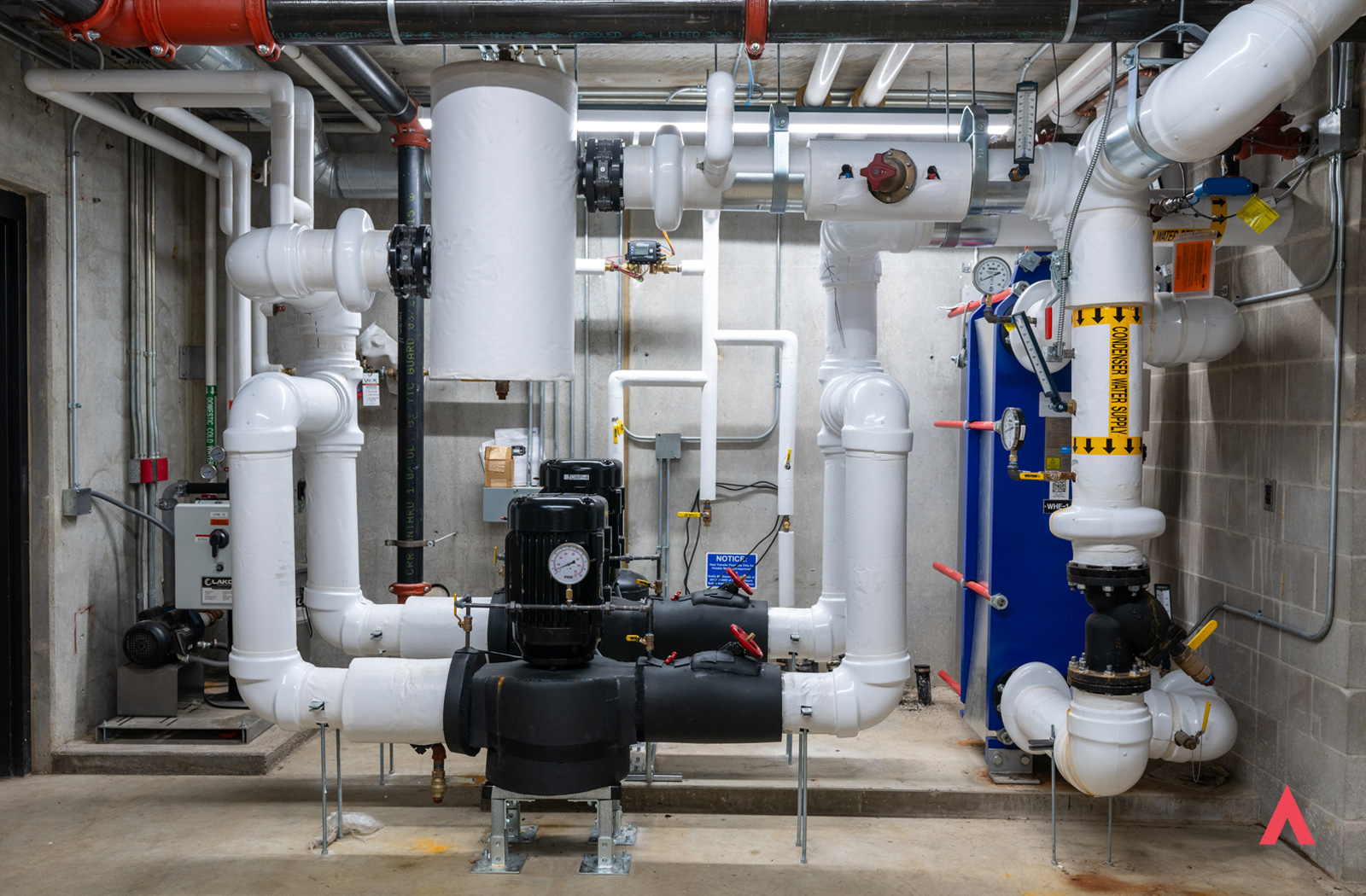
Darcy designed and constructed a 2-well groundwater geothermal system for Rochester City Hall, delivering:
- 156 tons of cooling capacity
- 1,920 MBH of heating capacity
- A compact footprint suited to the constraints of a downtown historic building
Construction began in June 2022 in a two-phase approach designed to keep City Hall fully operational throughout. The project proved less disruptive to building operations than anticipated, which was a significant consideration for an active municipal center serving Rochester residents daily.
The installation supports the city’s commitment to carbon-free heating and cooling for municipal operations, replacing fossil fuel combustion with clean, groundwater-enabled geothermal energy.
Outcomes: 65% Energy Reduction and a Blueprint for Rochester’s Future
Upon full completion, the City of Rochester expects a 65% reduction in energy use (measured in BTUs per square foot) at City Hall, along with significantly lower maintenance costs compared to the aging steam system it replaced.
Those outcomes extend beyond City Hall itself. Rochester’s sustainability team documented lessons from the project on water treatment, permitting, and stakeholder engagement, specifically to streamline future geothermal installations across the city.
“The goal is to build an interconnected system that lets us share and scale capacity,” said Sustainability Lead Scot Ramsey. Rochester’s next step is to expand City Hall’s success into a citywide thermal energy network, linking both public and private buildings through shared geothermal capacity. City Hall’s geothermal installation is the first node in what could become a networked energy future for downtown Rochester, MN.
What Rochester’s Geothermal Project Demonstrates
Rochester City Hall proves that historic preservation and modern sustainability aren’t in conflict but can instead be planned for together. A building constructed in the 1880s now runs on clean geothermal energy, without compromising its landmark character or disrupting the community it serves.
For other municipalities considering geothermal in Minnesota and beyond, Rochester’s experience offers a clear framework: tie infrastructure decisions to measurable climate goals, engage stakeholders early, design for lifecycle savings rather than lowest upfront cost, and document the results so the next project moves faster.
If your city or county is evaluating geothermal for municipal facilities, Darcy’s geologists can assess your site at no cost and tell you what your geology can deliver.