
Building History and Use
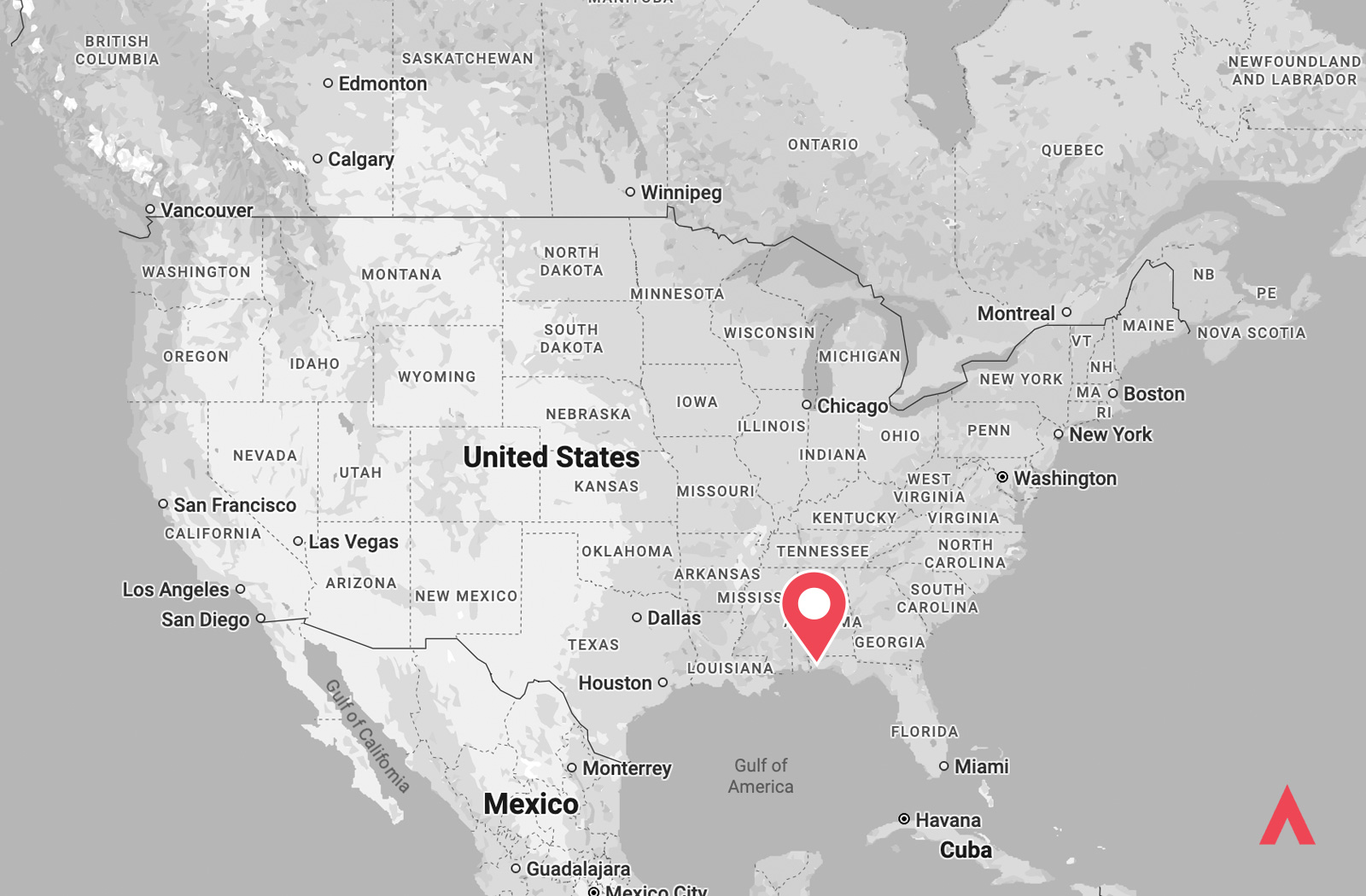
Naval Air Station Whiting Field has been the backbone of undergraduate naval aviation training since it opened in 1943. Located in Santa Rosa County near Milton in Florida’s Panhandle, the installation is home to Training Air Wing Five and serves as the primary training base for rotary-wing and tilt-rotor aircraft for the U.S. Navy, Marine Corps, and Coast Guard. The base operates two airfields and trains the majority of the Navy’s helicopter pilots, making it one of the most operationally significant aviation training installations in the country.
Like all U.S. military installations, NAS Whiting Field operates under a mandate to improve energy resilience, reduce dependence on external utility infrastructure, and lower long-term operational costs. The ability to maintain mission-critical operations during grid disruptions or other energy supply interruptions is a readiness requirement, and evaluating new energy technologies for on-base facilities is part of how the Navy systematically advances toward those goals.
Why Geothermal?
The installation’s energy management team identified an existing facility as a strong candidate for a geothermal technology demonstration. The building currently operates with a 60-ton air-cooled chilled water system, and initial analysis indicated that a single Darcy well could either replace the existing system outright or supplement it in a hybrid configuration, with the existing system remaining in place to provide full redundancy if desired.
NAS Whiting Field Installation Energy Manager Jason Poe and Facilities Management Director George Rials confirmed the building as a suitable fit for the demonstration, citing its operational profile and the value of testing the technology in a real base environment before considering broader deployment.
Geothermal is a particularly compelling option for military installations for reasons that go beyond efficiency. Military bases have a strategic need to reduce reliance on external utility grids and to couple energy systems with distributed generation and storage, such as solar arrays, battery backup, and microgrid capability. A geothermal system runs on electricity, has no combustion, requires minimal above-grade infrastructure, and can integrate directly with distributed energy resources to support island operations during emergencies or grid outages. For a mission-critical installation, that combination of efficiency and resilience is difficult to match with conventional mechanical systems.
The Northwest Florida Panhandle’s geology also supports the technology well, with accessible aquifer conditions that make groundwater-enabled geothermal a practical fit for the region.
Design and Construction
Darcy completed a site walk of the facility and has been working with the project partners and facility management team to finalize the system design. Mobilization and construction are planned to begin in 2026. The installation consists of a single groundwater well delivering 35 tons of cooling and 188 MBH of heating, integrated with the building’s existing mechanical infrastructure.
The project is structured as a demonstration, with performance data from the installation informing future decisions about geothermal technology adoption at NAS Whiting Field and potentially across other Navy installations in the region.
Testing Technology for the Mission
The NAS Whiting Field project reflects a broader pattern in how the U.S. military evaluates and adopts new energy technologies: Start with a well-defined demonstration at the building scale, measure performance against operational requirements, and build confidence before committing to wider deployment. For Darcy, working within that framework is a natural fit, and the same proof-of-concept approach that led to broader adoption at MSP Airport and other multi-phase clients applies equally in a military context.
If the demonstration performs as projected, NAS Whiting Field could become a model for how other naval installations across the Southeast evaluate geothermal as part of their long-term energy resilience strategies.