Project Background
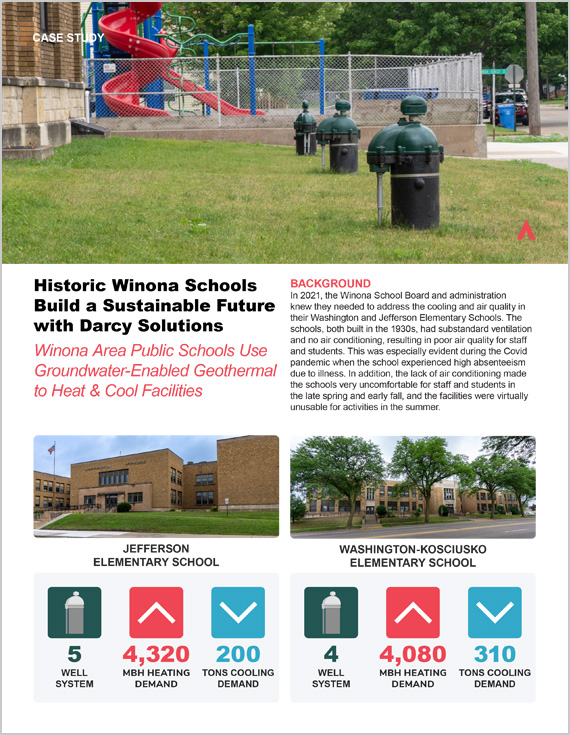
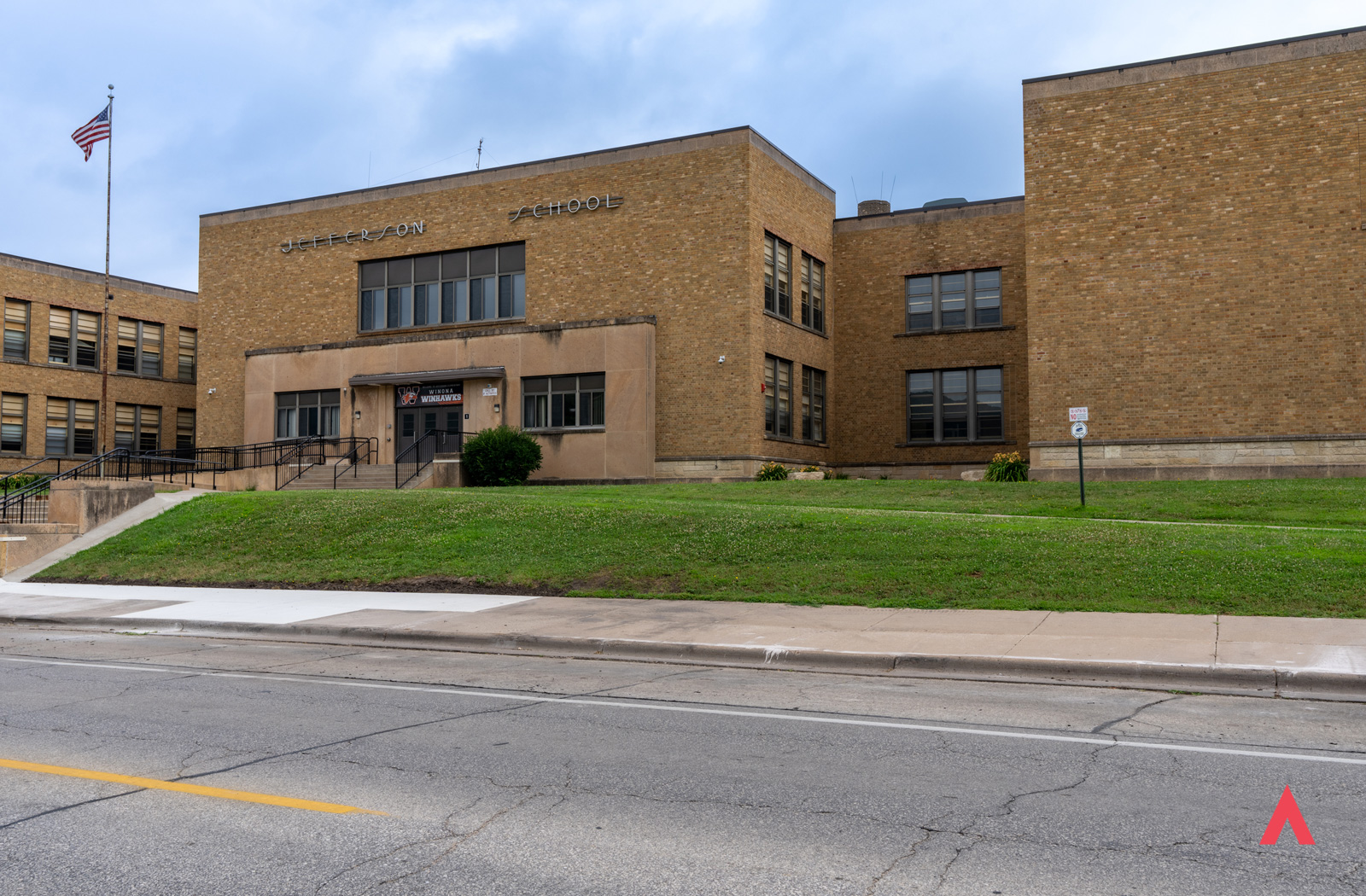
By 2021, Winona Area Public Schools had reached a turning point. Jefferson Elementary and nearby Washington-Kosciusko Elementary, both built in the 1930s, had substandard ventilation and no air conditioning. Poor indoor air quality affected staff and students year-round, which became especially difficult to ignore during the COVID-19 pandemic, when high absenteeism due to illness put a spotlight on building conditions. In the late spring and early fall, the buildings were uncomfortable. In the summer, they were largely unusable.
The school board and administration knew the situation needed to change, and set out to address long-term cooling and air quality needs in a way that was financially responsible, environmentally sound, and compatible with the existing footprint of two historic buildings the community had chosen to preserve.
Objectives and Process
The school board’s Finance Committee took on the task of identifying and evaluating options. Their criteria were clear, in that the solution needed to:
- Address cooling and air quality for the long term.
- Fit within the existing building footprints.
- Be financially feasible.
- Align with the community’s interest in environmental sustainability.
Importantly, the board also wanted to preserve the history of both buildings rather than pursue demolition or major structural changes.
After an exhaustive review process involving architects and engineers, the board chose Darcy, as the groundwater geothermal system stood out for its high efficiency, compact site footprint, and long-term sustainability. The land in Winona also proved well-suited for geothermal, with strong hydrologic productivity in the local aquifer. The district had some prior familiarity with the technology through its Alternative Learning Center, which had already been using a similar system.
“Addressing air quality and the health and safety of our staff and students was a big priority for us,” said School Board Member Nancy Denzer. “We believed a geothermal solution would meet those needs.”
Darcy engineers partnered with Wold and Kraus-Anderson throughout the planning period to develop a system tailored to the site’s conditions and the school’s operational requirements.
Design and Construction
Because the school remained in operation throughout the project, construction was broken into two phases and scheduled during summer months to minimize disruption to students and staff. Darcy managed the design and installation of both a building-side closed geothermal loop using a water-to-water heat pump and a ground-side closed geothermal loop and open aquifer system.
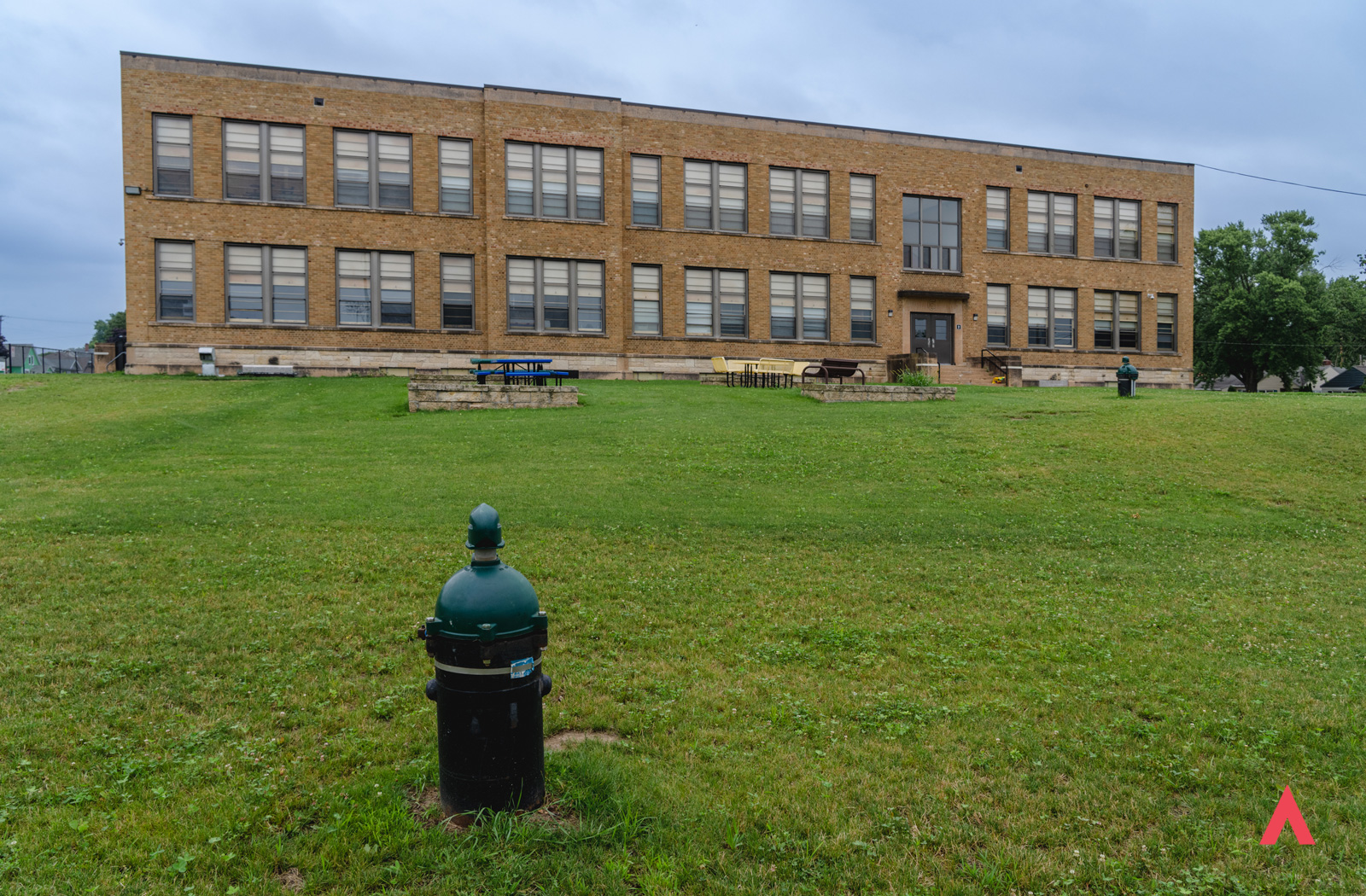
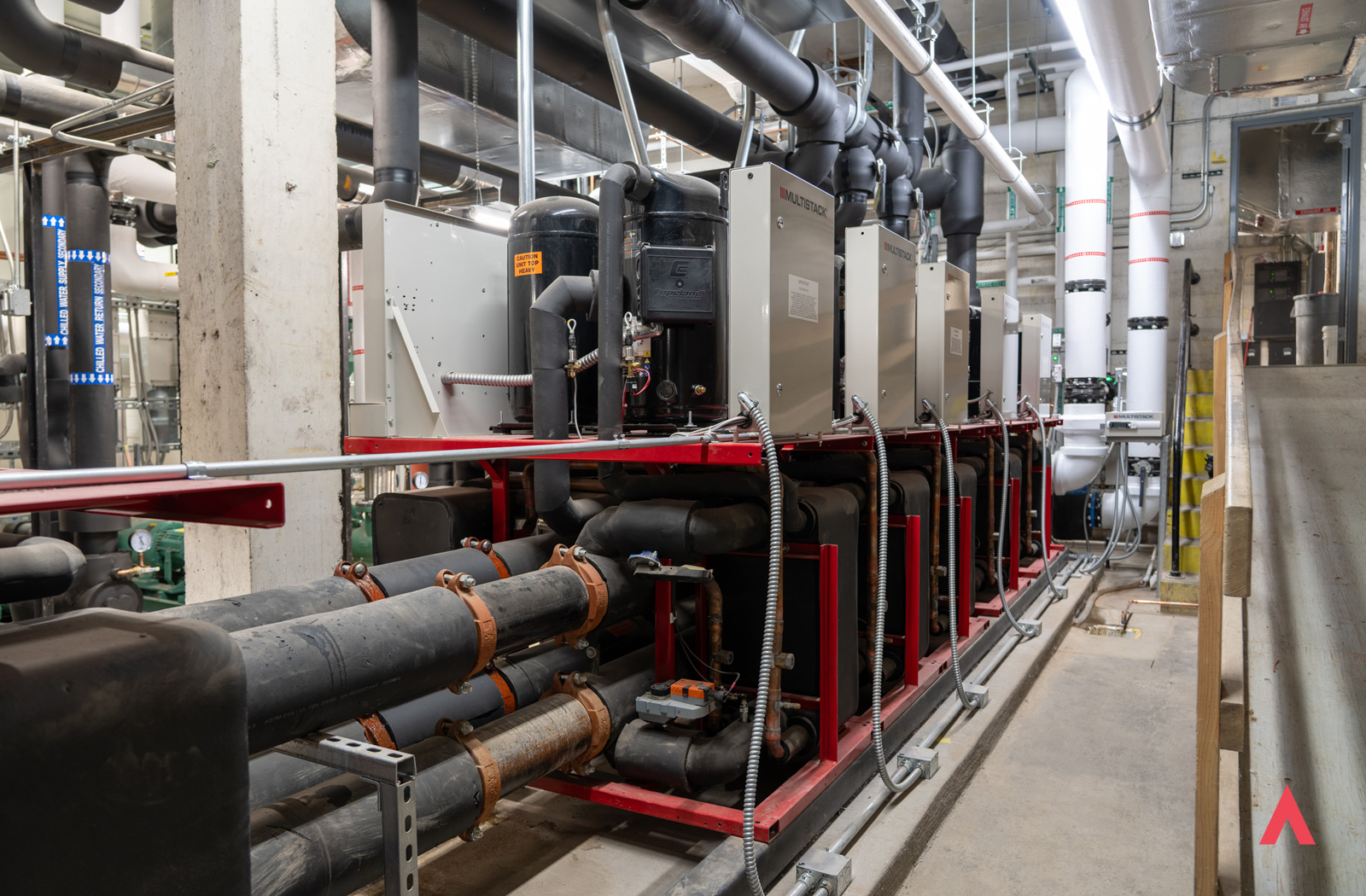
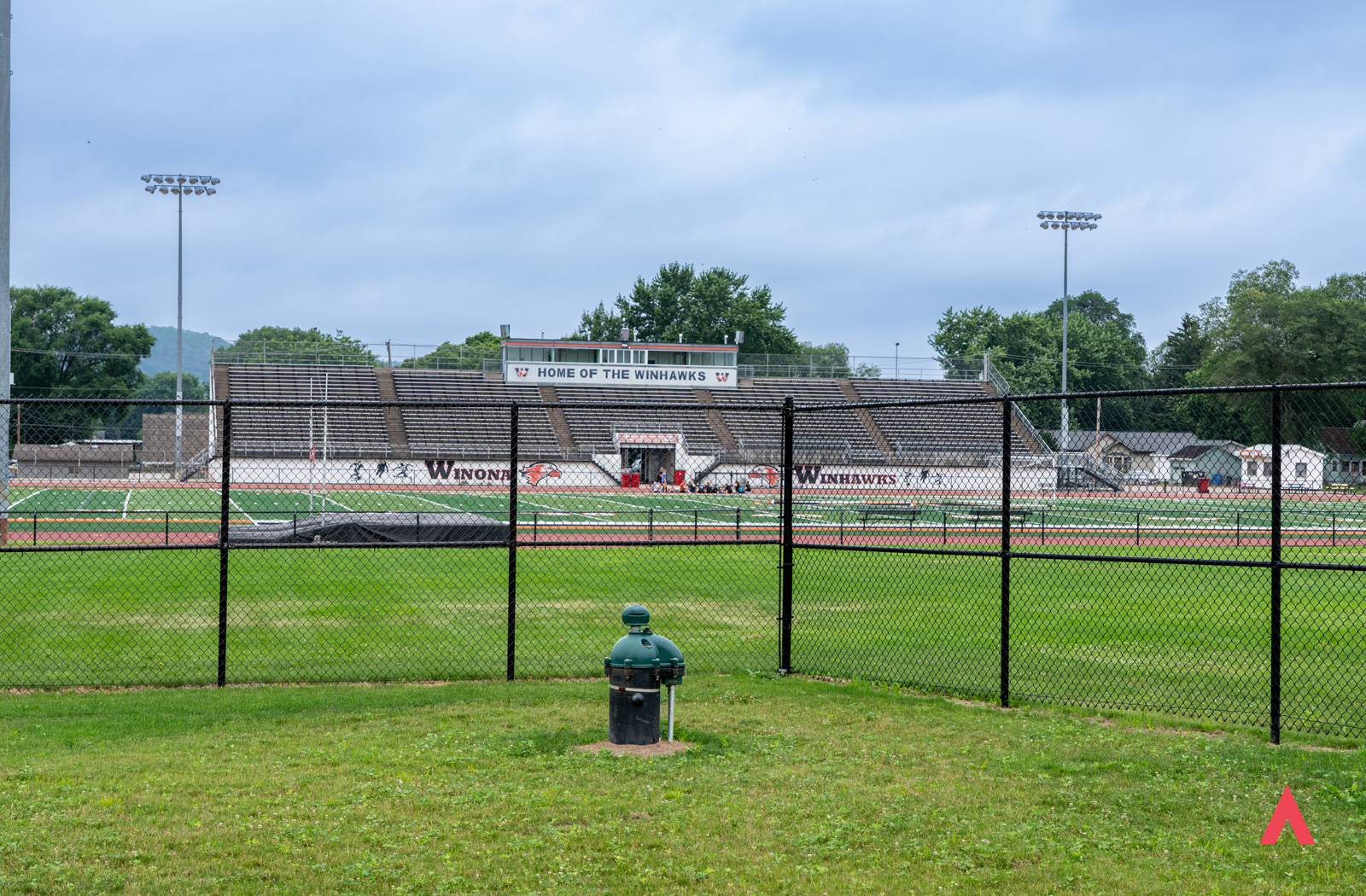
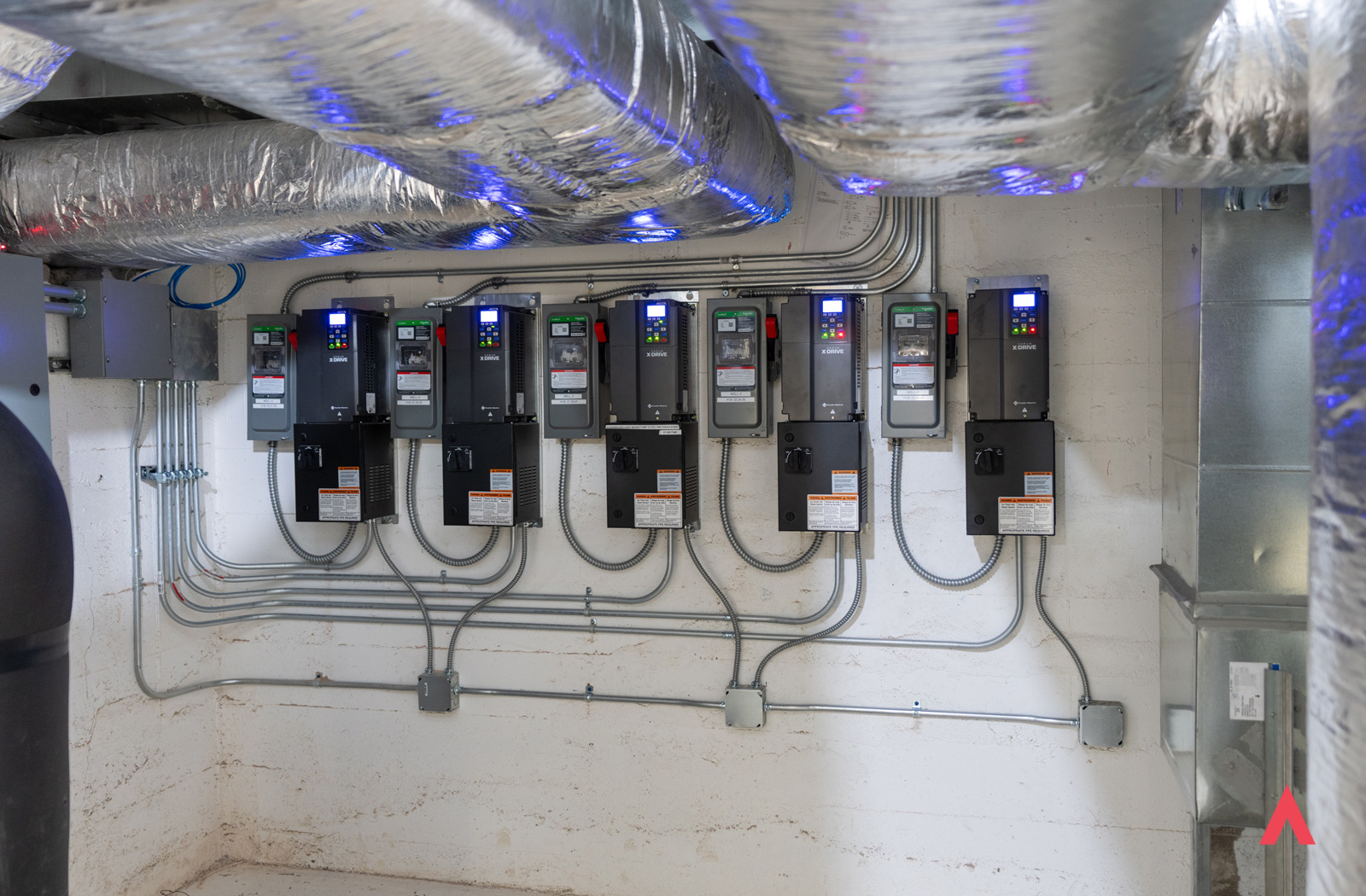
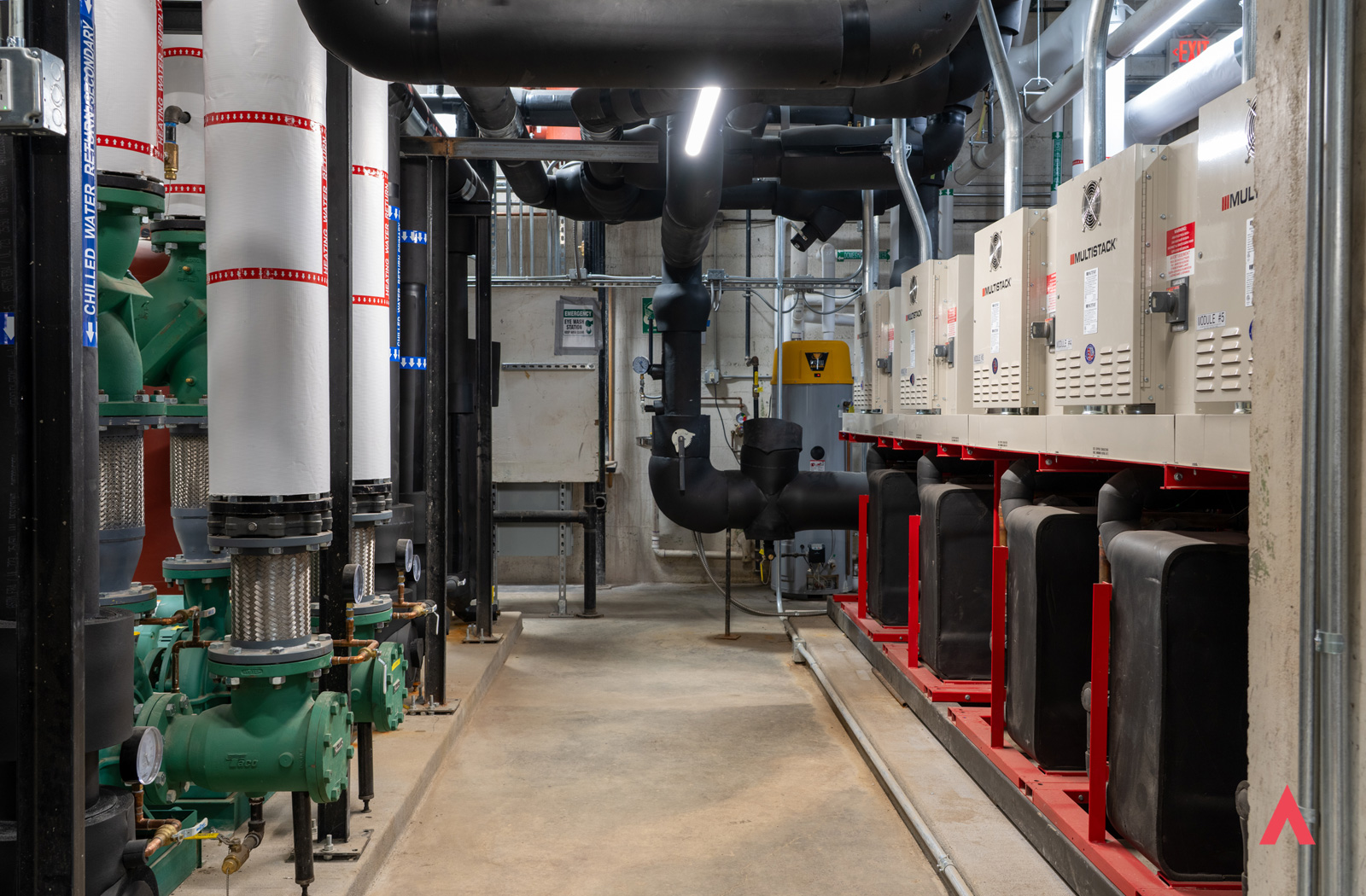
Five wells were installed in the open area between Jefferson’s sporting fields and the school building. The system connects laterally to a retrofitted mechanical room, where central heat pumps distribute thermal energy to classrooms and throughout the facility.
One of the advantages of the Darcy system in a retrofit context is its minimal footprint. As Mike Lavoie, Director of Systems Engineering at Darcy, explains, “Our system takes up less space and is less visible than other traditional HVAC solutions.” The wells are discreet, the mechanical room upgrade was contained, and the historic character of the building was preserved throughout.
Results and Benefits
Since installation, the Jefferson Elementary geothermal system has performed exactly as designed. Air quality improved, the learning environment became more comfortable year-round, and energy costs began to decline. The district is also pursuing available financial incentives, including federal tax credits and rebates from Xcel Energy.
Justin Haller, Maintenance Supervisor, came into the project with a background in HVAC but limited prior experience with geothermal systems. “Once complete, the systems worked great and did exactly what they were designed to do,” Haller said after working with the system through multiple seasons. “There haven’t been any significant challenges and ongoing maintenance has gone smoothly.”
The long-term economics also hold up. A conventional boiler system has a typical lifespan of around 25 years, while a geothermal heat exchange well can last up to 75 years. Geothermal systems also operate at a coefficient of performance well above conventional alternatives, delivering up to four units of energy output for every one unit of electricity consumed.
Superintendent Brad Berzinski captured the district’s overall experience: “We will get 30 percent of our costs reimbursed for using Prevailing Wage and Apprenticeship requirements on the project. This has been a real positive for our school district, staff, and students. We are very happy with the decision and the results.”