

Building History and Use
The Metropolitan Airports Commission (MAC), which owns and operates MSP, has been investing in energy efficiency and emissions reduction for decades. Since 1998, its multi-phase Energy Conservation Program has reduced energy consumption at MSP by 30%, saving more than 40,000 megawatt hours of electrical usage. In 2020, the MAC board adopted formal 2030 sustainability goals targeting an 80% reduction in emissions from a 2014/15 baseline, with net-zero operations as the long-term target by 2050.
Airports are complex, high-demand environments where energy systems must perform reliably around the clock under conditions that range from extreme Minnesota winters to peak summer cooling loads. Any new technology introduced to an airport campus needs to prove its performance and operational compatibility before being considered for larger-scale deployment. The security gate pilot project was designed to do exactly that.
Why Geothermal?
MSP’s sustainability agenda has long prioritized on-site renewable energy alongside operational efficiency measures. The airport has invested in one of the largest rooftop solar arrays in Minnesota, LED lighting campus-wide, and energy management systems spanning multiple terminals. Geothermal was an obvious next frontier, but introducing it at airport scale required evidence of performance in the specific conditions and constraints of an active airfield environment.
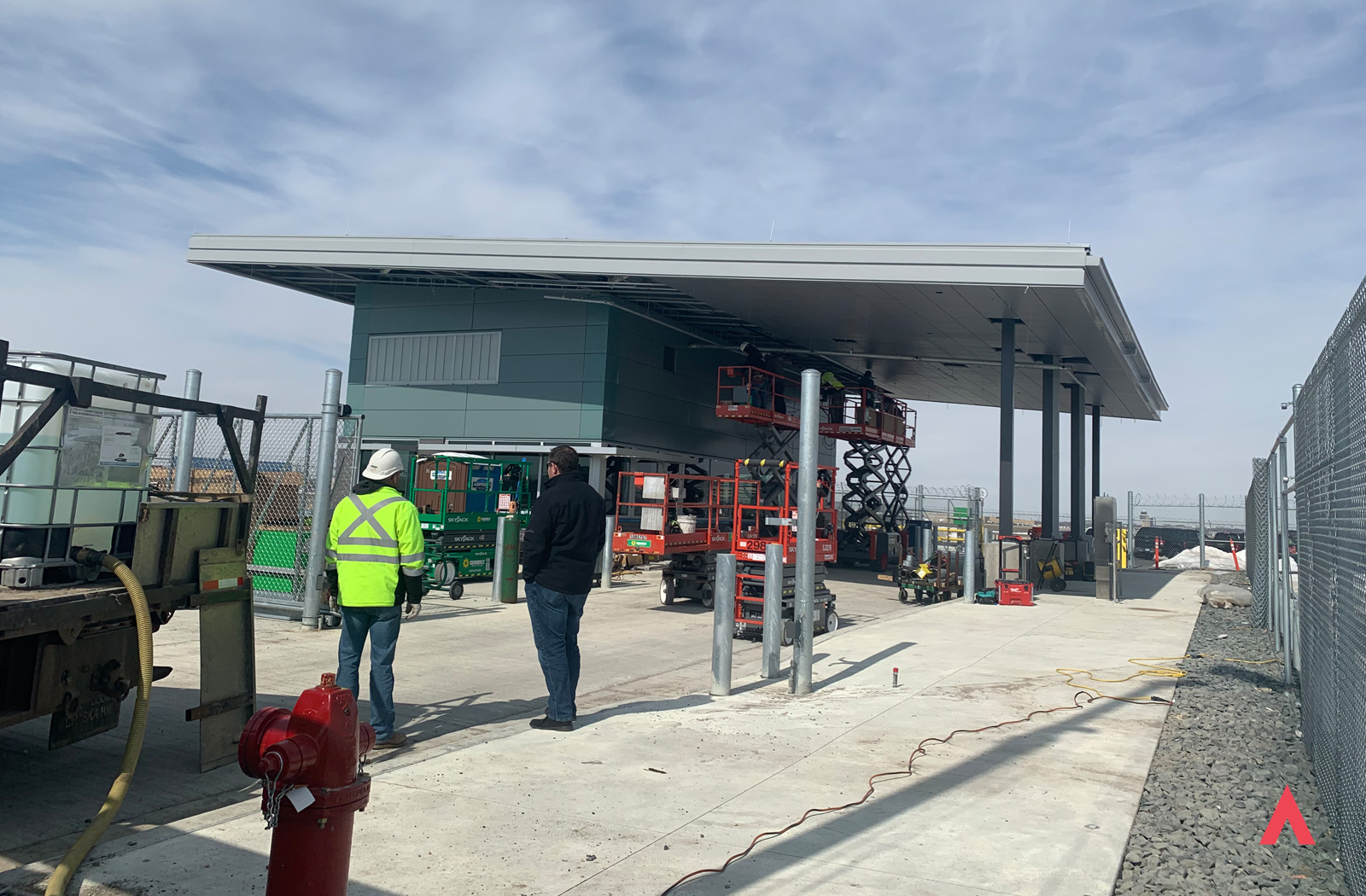
The perimeter security gate presented a suitable context for a pilot installation. The checkpoint required year-round heating and cooling, operated continuously, and sat in a location where a compact single-well system could be installed and monitored without disrupting airfield operations. Darcy was selected based on its ability to deliver high thermal capacity from a minimal above-grade footprint, which was a critical requirement in a security-sensitive, operationally constrained environment where site disruption had to be kept to an absolute minimum.
Design and Construction
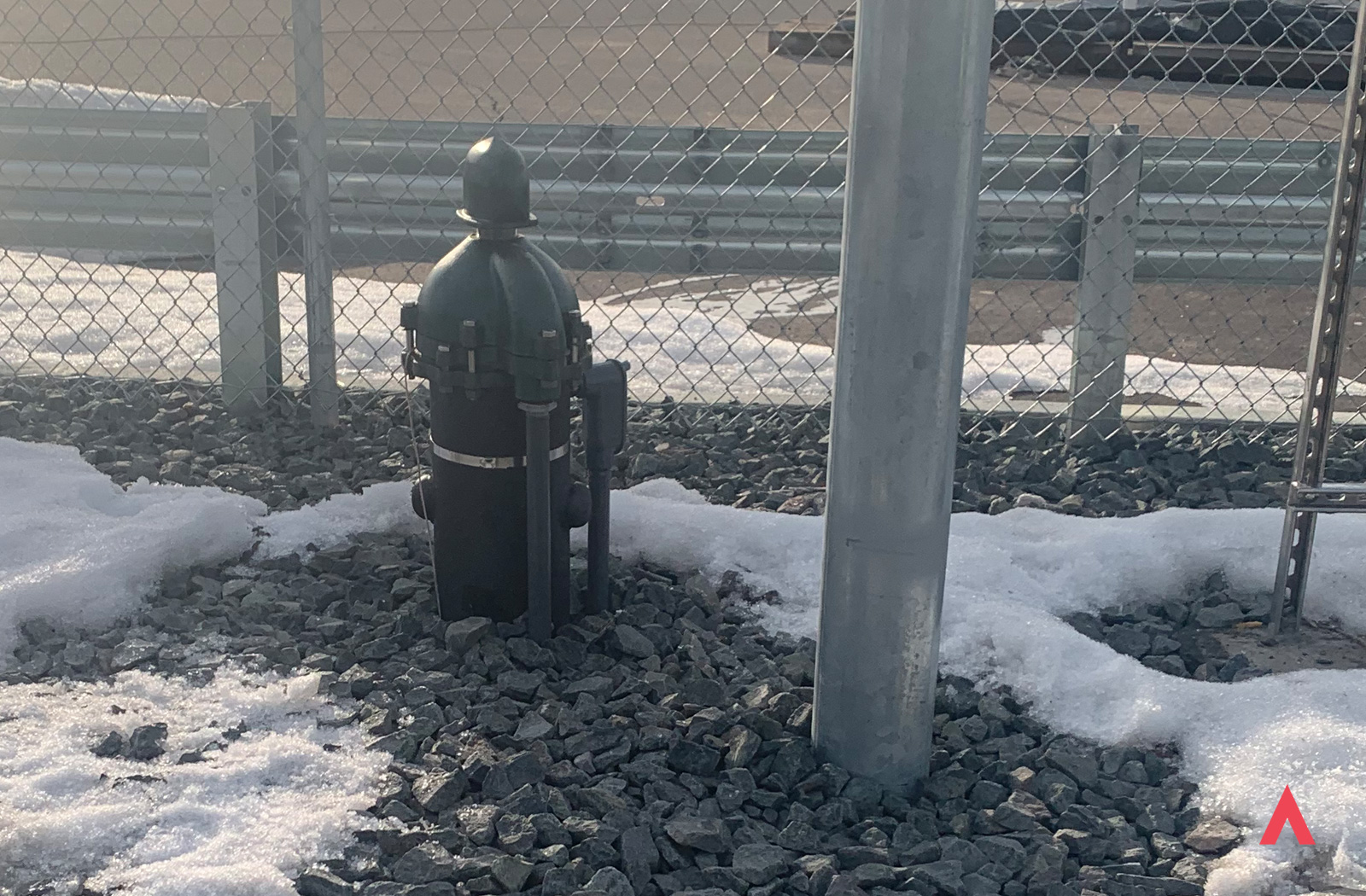
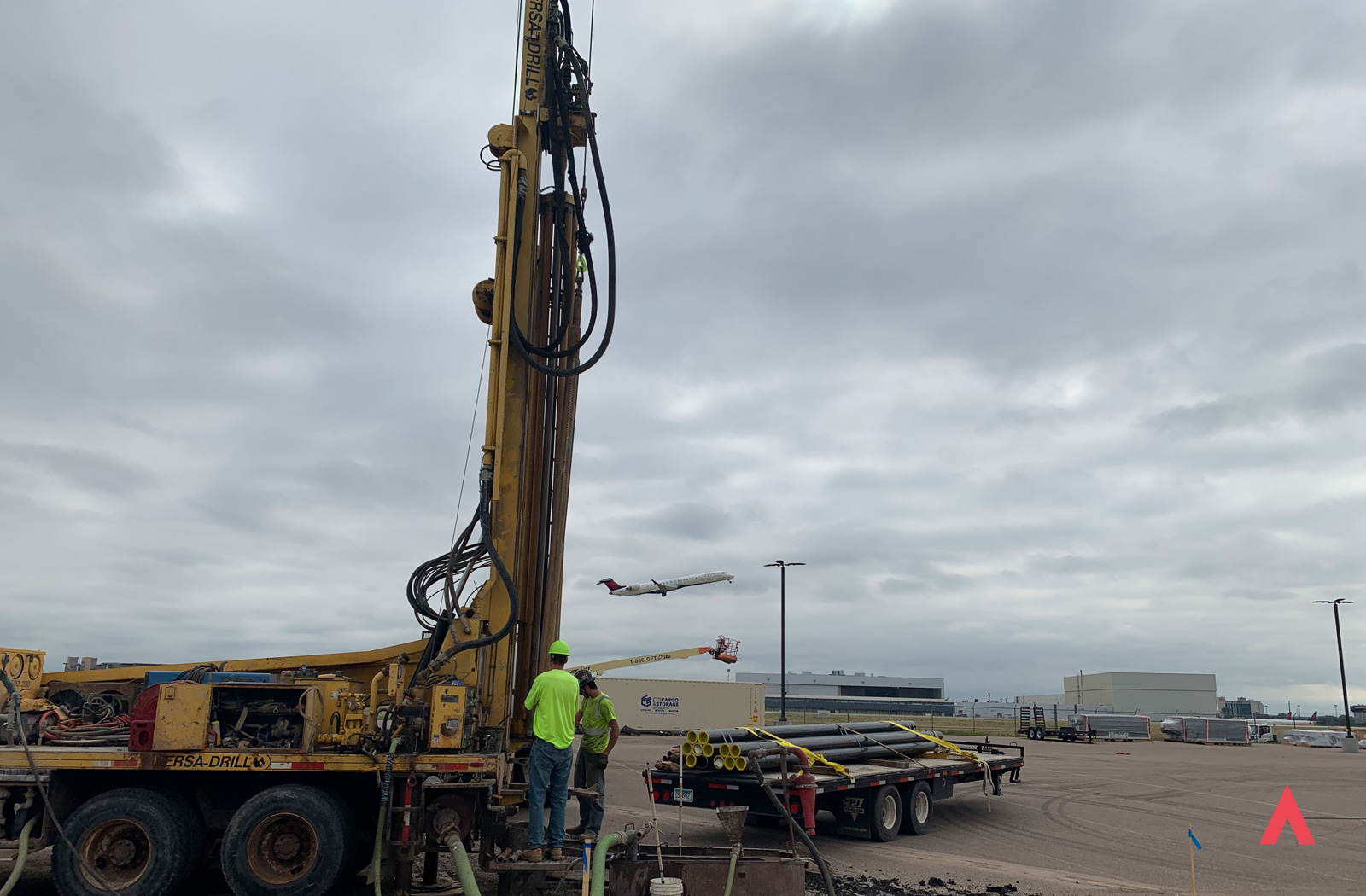
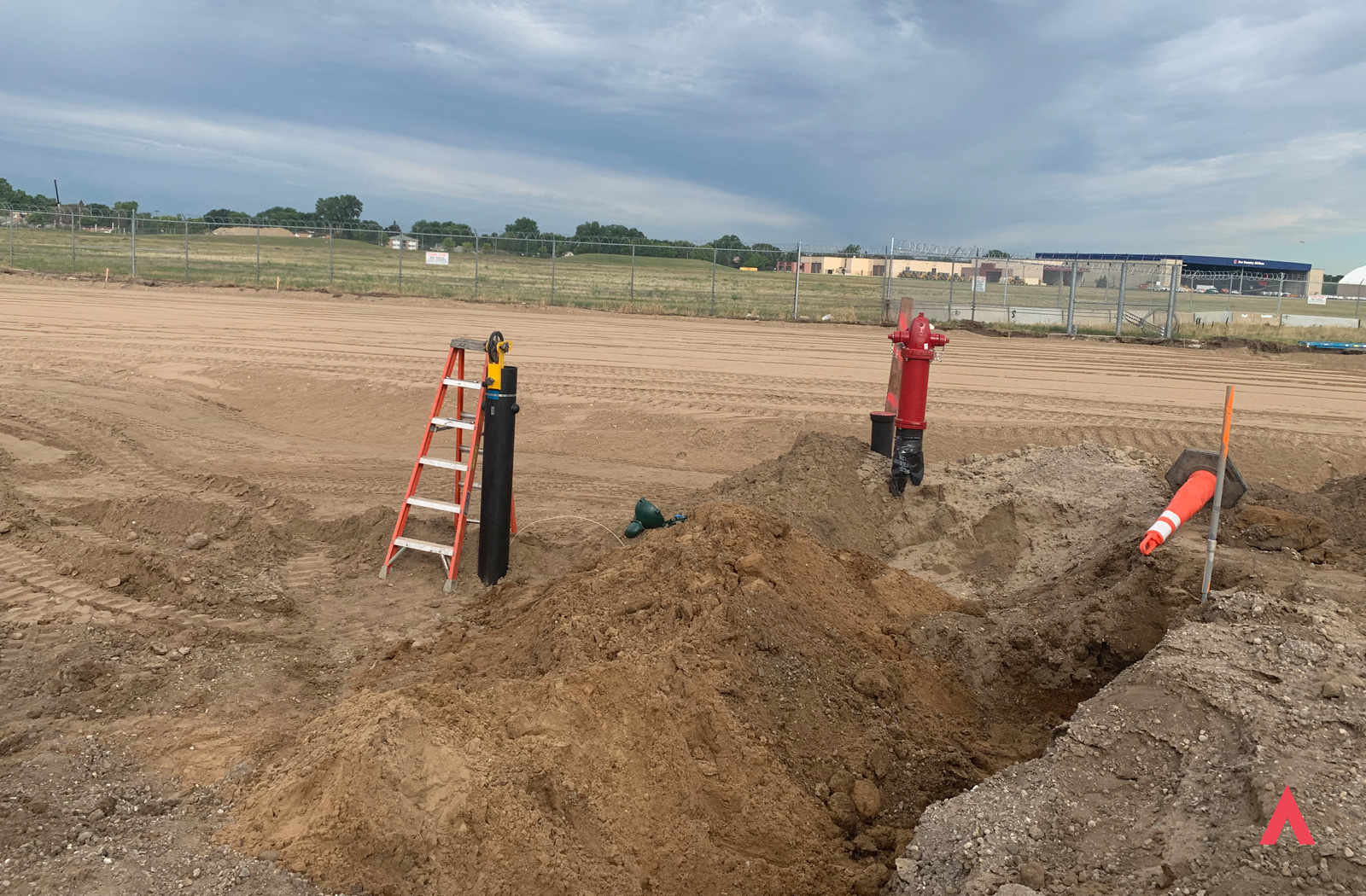
The system consists of a single groundwater well delivering 10 tons of cooling and 81 MBH of heating to the security checkpoint facility. The well was sited in tight quarters adjacent to the checkpoint, demonstrating that Darcy’s compact approach could perform effectively even in the most space-constrained airport settings.
Since installation, the system has operated reliably through multiple Minnesota seasonal cycles, providing the MAC with real performance data from an active airfield context.
A Pilot That Opened Bigger Doors
The security gate project’s success contributed directly to Darcy’s selection for a far larger opportunity at MSP: a four-well groundwater geothermal system as part of the $263 million Terminal 2 north expansion, expected to be complete in 2027. That project is designed to reduce overall energy demand for heating and cooling in the expanded terminal by 19%, and the MAC is pursuing LEED Gold certification for the expansion. The Terminal 2 system represents one of the most significant geothermal installations at any airport in the United States.
The arc from a single well at a perimeter security gate to a four-well system serving a major terminal expansion is a clear illustration of how Darcy’s approach works in practice, demonstrating performance at a scale that fits the moment and then growing with the client as confidence builds and ambition expands.