
Healthcare facilities operate in a category of their own when it comes to building systems. A hospital or major clinic is never fully off, running 24 hours a day, 365 days a year, with patient comfort, clinical outcomes, and regulatory compliance all directly tied to the performance of the mechanical infrastructure. The HVAC system is much more than a background utility within healthcare settings, serving as a truly mission-critical component.
That reality shapes everything about how healthcare organizations think about energy. Reliability comes first, cost control is a close second, and sustainability (driven by board commitments, accreditation expectations, and community obligations) has increasingly become a non-negotiable third. Commercial geothermal heating and cooling addresses all three simultaneously, and healthcare facilities are among the building types where geothermal’s advantages are most compelling.
Below, we cover what makes healthcare facilities well-suited for geothermal, how the technology supports the performance and regulatory requirements of clinical environments, and what the financial case looks like over the full lifecycle of the system.
Why Healthcare Facilities Are Exceptional Geothermal Candidates
The strongest geothermal candidates have large and consistent energy loads, long building lifecycles, high reliability requirements, and organizational priorities that align with geothermal’s core strengths. Healthcare facilities check every one of these boxes.
Around-the-Clock, Year-Round Operation
Most commercial buildings have significant unoccupied periods when HVAC loads drop substantially. Healthcare facilities largely do not, with patient care areas, surgical suites, ICUs, emergency departments, and central utilities plants running continuously. That constant, predictable load profile is one of geothermal’s strongest performance environments. The system operates at a consistently high utilization rate, which is where its efficiency advantages compound most significantly, and the energy savings are realized around the clock rather than only during peak occupancy hours.
Large, Cooling-Dominant Thermal Loads
Hospitals and major clinical facilities are significantly more cooling-intensive than most commercial building types. Medical equipment, lighting, occupancy density, and heat generated by clinical processes all create substantial internal heat gains that must be managed year-round, including in winter months.
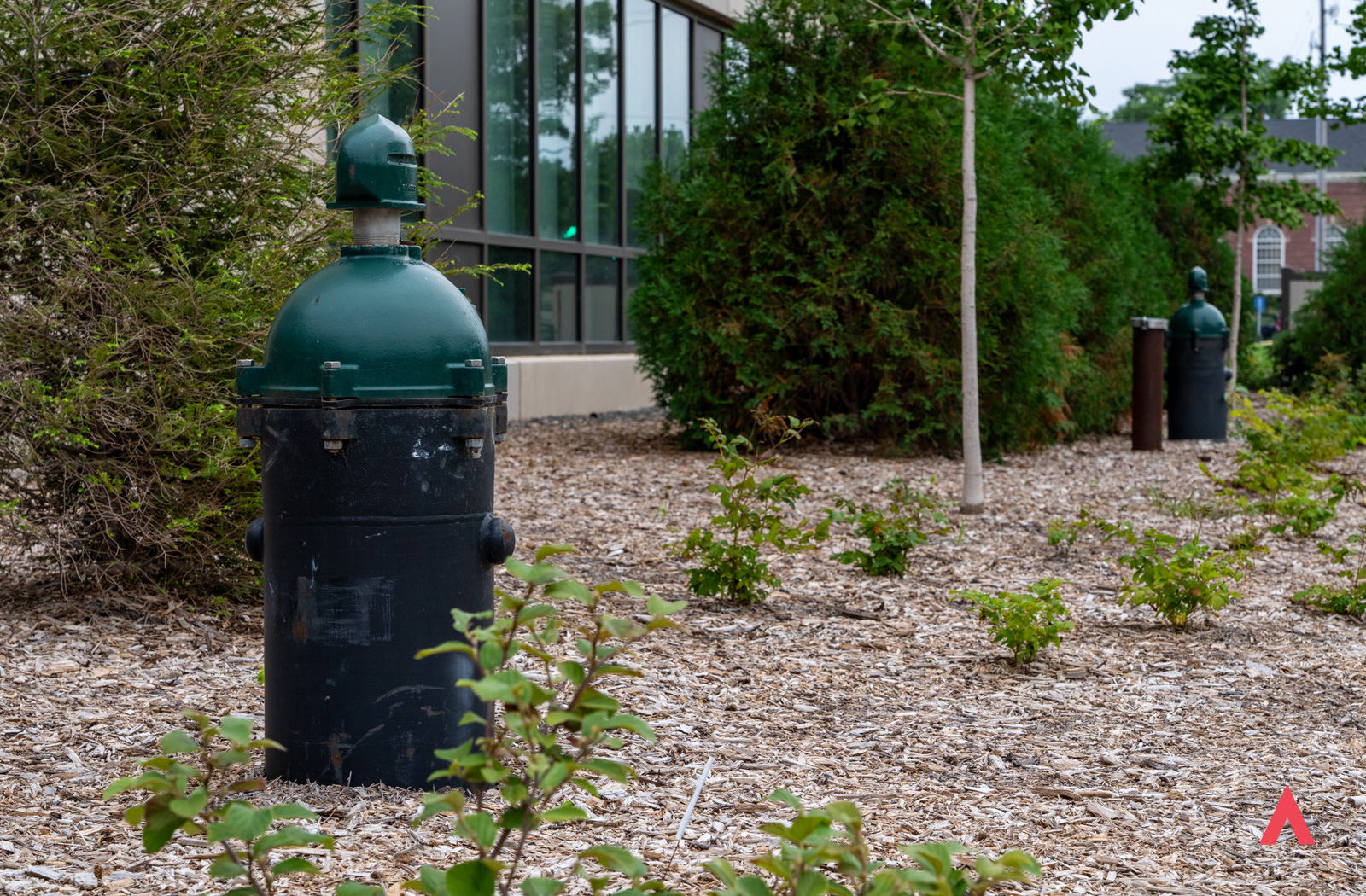
Groundwater-based geothermal systems are particularly well-suited for cooling-dominant applications. The naturally stable temperature of groundwater provides an ideal heat sink for rejecting large building heat loads efficiently, and Darcy’s Dipole well configuration can deliver 200 or more tons of cooling capacity from a single well, making it possible to serve major clinical facilities from a compact well field.
Long Building Lifecycles and Capital Planning Horizons
A major hospital constructed today will almost certainly still be operating 50 to 60 years from now, and the mechanical infrastructure installed during original construction or a major renovation will define the building’s energy and operating cost profile for decades. Geothermal systems are engineered to match that time horizon, with underground well infrastructure designed for 50-plus years of service life and building-side heat pump equipment carrying a service life of 20 to 25 years. The long-term financial case for geothermal is strongest in exactly the kind of capital planning environment that healthcare organizations operate in.
Reliability: The Standard Healthcare Facilities Cannot Compromise
In a hospital, an HVAC failure can be a patient safety event. Surgical suites, ICUs, neonatal care areas, and sterile processing facilities all require continuous, precise environmental control, meeting clinically mandated temperature, humidity, and air quality parameters that directly affect patient outcomes.
A Simpler Mechanical Plant with Fewer Failure Points
A conventional heating and cooling plant for a large hospital may include gas-fired boilers, cooling towers, chillers, and extensive rooftop equipment, each representing a category of mechanical components that requires regular maintenance, is exposed to weather and wear, and can fail independently.
A geothermal system eliminates several of these categories.
- There are no cooling towers (with their associated maintenance burden and legionella risk) and no rooftop units exposed to the elements.
- The underground well infrastructure is passive and requires significantly less maintenance over its service life.
- Active mechanical components (heat pumps, pumps, controls) are housed indoors, operating within a narrower range of thermal conditions that supports longer equipment life and more predictable maintenance scheduling.
For healthcare facilities teams managing Joint Commission compliance, a simplified mechanical plant with fewer outdoor components and failure modes is a meaningful operational advantage.
Redundancy by Design
Healthcare facilities routinely design HVAC systems with N+1 redundancy configurations that ensure a single equipment failure does not interrupt care delivery. Geothermal systems accommodate this design approach naturally. Multiple heat pumps can be configured so that any single unit can be taken offline for service without disrupting the overall system. The underground well field provides a shared thermal resource with no single point of failure. Darcy’s engineering approach includes redundancy planning as a standard component of healthcare system design.
No Combustion, No Combustion Risk
Gas boiler systems require fuel supply infrastructure, combustion equipment maintenance, exhaust handling, and carbon monoxide monitoring. Equipment failures in combustion systems, including flue gas leaks, burner malfunctions, and pressure events, represent safety risks that hospital safety officers and facilities teams actively manage.
A geothermal system is fully electric, with no combustion anywhere in the system, no exhaust to manage, and no combustion-related safety risk. For hospitals already managing complex safety programs across dozens of hazard categories, removing an entire class of combustion-related risk from the mechanical plant is a genuine operational benefit.
Indoor Air Quality and Infection Control
Healthcare HVAC is governed by ANSI/ASHRAE/ASHE Standard 170 (Ventilation of Health Care Facilities), the foundational standard for healthcare ventilation in the United States, most recently updated in 2025. Standard 170 defines specific, measurable requirements for air change rates, pressure relationships, filtration levels, and temperature and humidity control across more than 60 distinct space types within a healthcare facility.
These requirements exist because ventilation failures in healthcare settings translate directly into patient harm, including surgical site infections from inadequate air changes in operating rooms and airborne transmission events from isolation rooms that lose proper pressure differentials.
How Geothermal Supports ASHRAE 170 Compliance
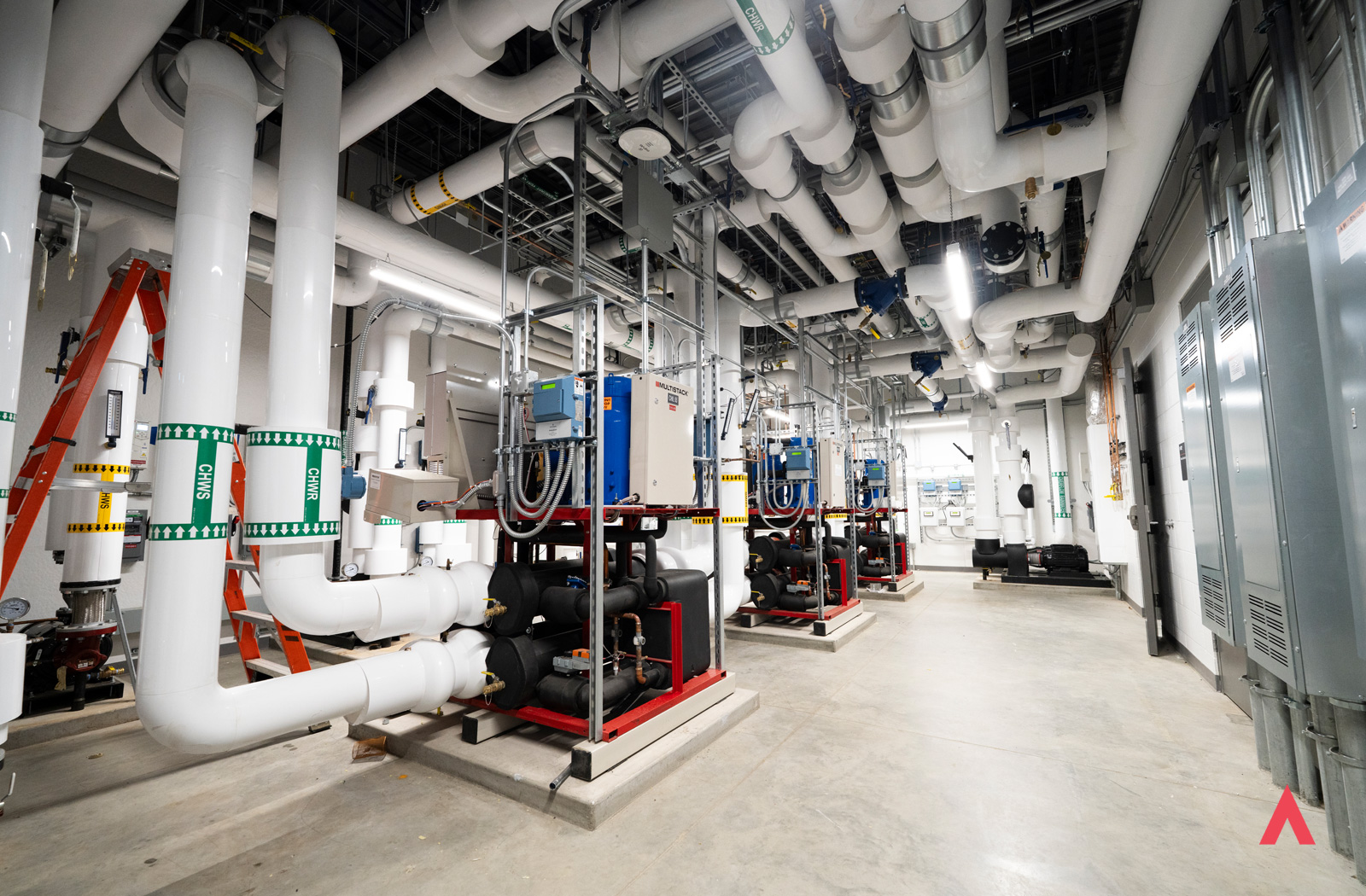
Geothermal systems, as central plant heating and cooling sources, are designed to support whatever air handling and distribution configuration the healthcare project requires, including the precise temperature control, humidity management, and air change rates mandated by Standard 170. The geothermal plant provides conditioned water to the building’s air handling units and terminal equipment, while the air-side design (air change rates, filtration, pressure relationships) is handled by the building’s air handling infrastructure, which remains fully configurable to meet Standard 170 requirements regardless of the heating and cooling source.
Geothermal and Standard 170 compliance are entirely compatible, and a well-coordinated design achieves full compliance while capturing all of geothermal’s efficiency and sustainability benefits.
No Combustion Byproducts in the Indoor Environment
In facilities where infection control is paramount, the elimination of combustion from the HVAC system carries significant benefit for indoor air quality. A geothermal system produces no combustion exhaust, no carbon monoxide, and no combustion byproducts that could affect indoor air quality. It also eliminates the need for combustion air supply and exhaust infrastructure in the mechanical room, simplifying the ventilation design and removing a category of indoor air quality risk from the equation.
Precise Temperature and Humidity Control
Standard 170 requires precise environmental control across a wide range of space types. Operating rooms typically require temperature control within a 68 to 75 degrees F range and humidity between 20 and 60% relative humidity, with ICUs and patient rooms requiring similar precision.
Geothermal heat pumps, operating against the stable thermal resource provided by the ground or groundwater, deliver highly consistent supply water temperatures that support the precise environmental control required. The stability of the ground-side thermal resource is an advantage in precision control applications, with the heat pump operating within a consistent performance envelope rather than chasing wide variations in outdoor air temperature.
Energy Cost Control: What the Numbers Look Like for Healthcare
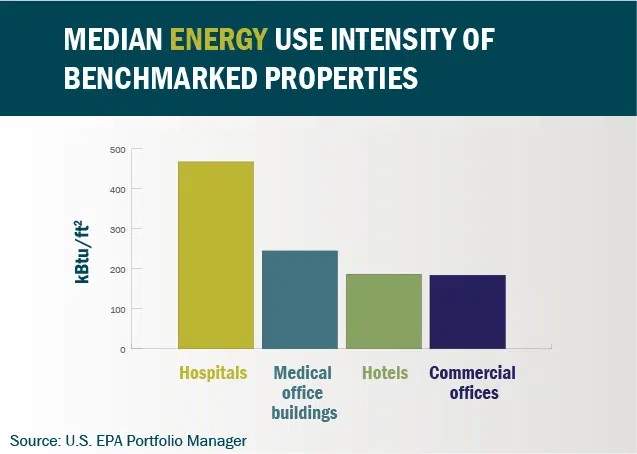
Hospitals typically rank among the most energy-intensive building types per square foot, with site energy use intensities (EUI) that are 3-4x higher than a typical commercial office building. For a major regional hospital, annual energy costs can easily reach several million dollars, of which HVAC makes up a significant portion. Geothermal addresses this directly through superior energy efficiency delivered continuously across the full operating schedule of the facility.
Efficiency That Compounds Over Time
With a coefficient of performance (COP) in the range of 3.0 to 8.0 or better for heating, and an energy efficiency ratio (EER) for cooling that consistently outperforms conventional chiller systems when measured against the stable thermal resource of groundwater, geothermal reduces the electrical energy required to condition the building by 40 to 70% compared to conventional electric alternatives. For a hospital operating 24/7/365, that efficiency margin translates into significant annual savings that compound further as energy prices fluctuate over the life of the system.
Stability Against Energy Price Volatility
Healthcare organizations operating gas-fired heating systems are exposed to natural gas price volatility that is difficult to hedge and budget for. Geothermal systems eliminate natural gas consumption from the HVAC equation entirely, replacing it with electricity, which can increasingly be sourced through long-term power purchase agreements, on-site solar, or utility programs that provide greater price predictability.
Federal Incentives Apply to Healthcare Projects
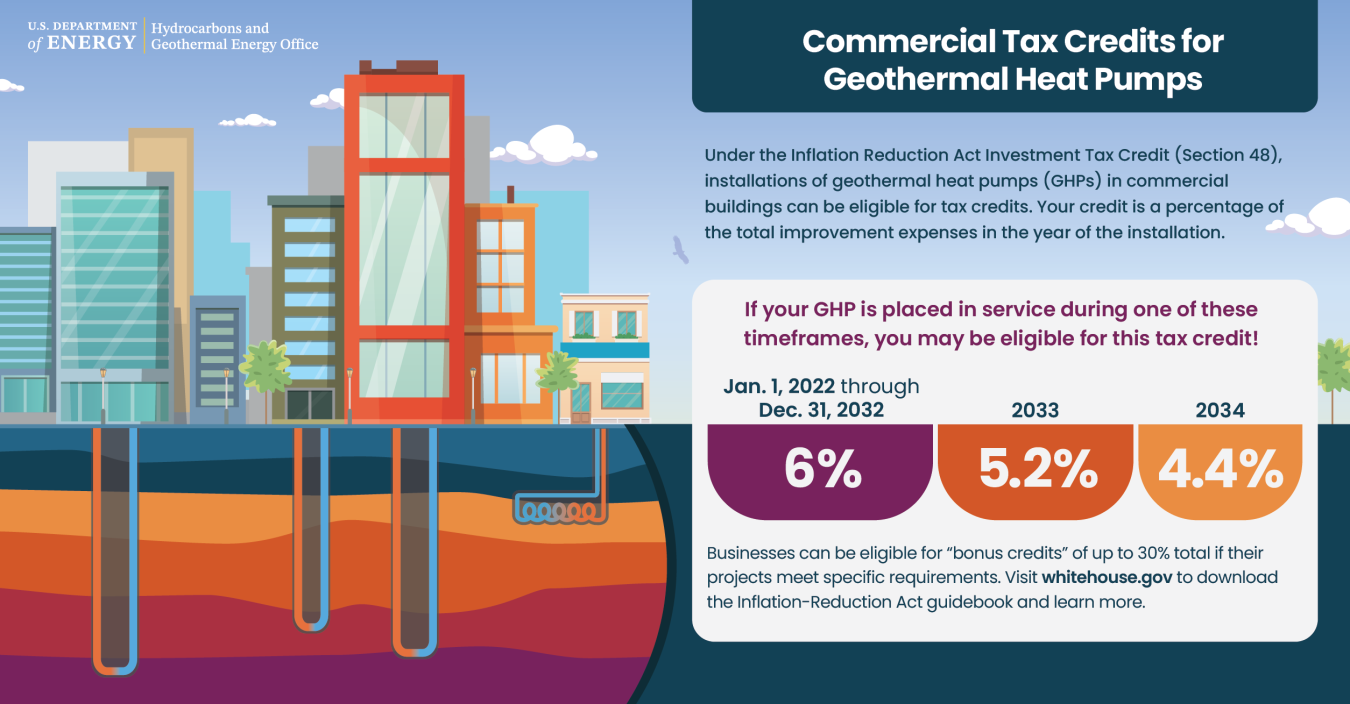
The federal Investment Tax Credit (ITC) for commercial geothermal, currently providing a base credit of 6% scalable up to 30% with prevailing wage and apprenticeship requirements met under Section 48/48E of the Internal Revenue Code, applies to healthcare facility projects.
For nonprofit hospital systems, the IRA’s direct pay provisions allow the ITC to be claimed as a direct payment from the Treasury rather than as a tax offset, making the full financial benefit accessible regardless of tax liability.
The One Big Beautiful Bill Act (OBBBA), signed in July 2025, explicitly preserved the Section 48/48E ITC for geothermal heat pump systems. The current credit structure holds through 2032 before beginning to phase down, giving healthcare organizations a well-defined window to capture the full credit value.
Geothermal in Practice: The Mayo Clinic Health System Example
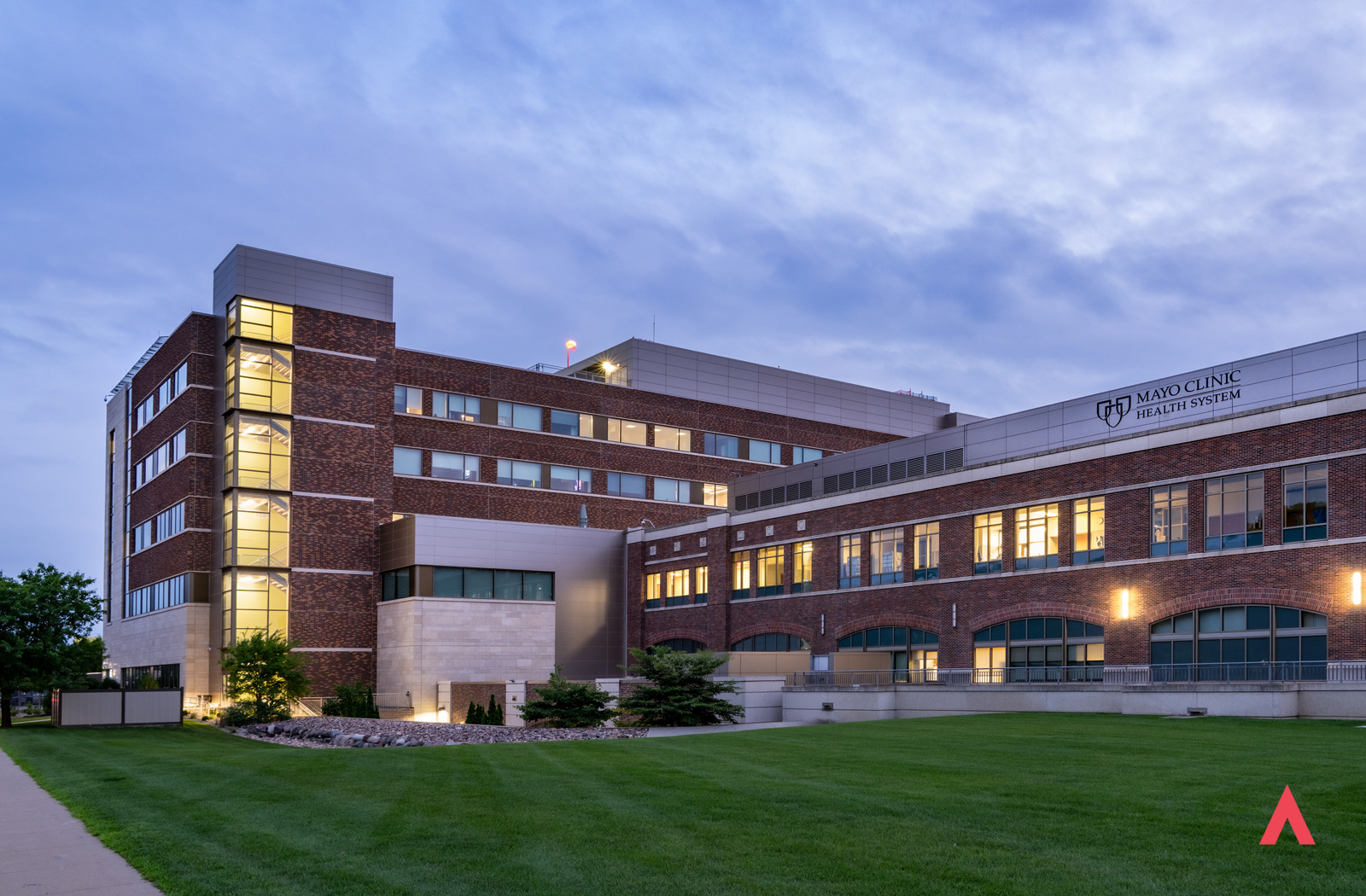
Darcy’s geothermal project at the Mayo Clinic Health System bed tower in La Crosse, WI, demonstrates what the technology looks like at healthcare scale. The project involved a 7-well, 828-ton groundwater geothermal system providing high-efficiency heating and cooling for a 96-bed inpatient facility. The system integrates with chilled beam technology to achieve significant carbon reductions and energy savings, and was designed to fit the constrained parcel available for the project.
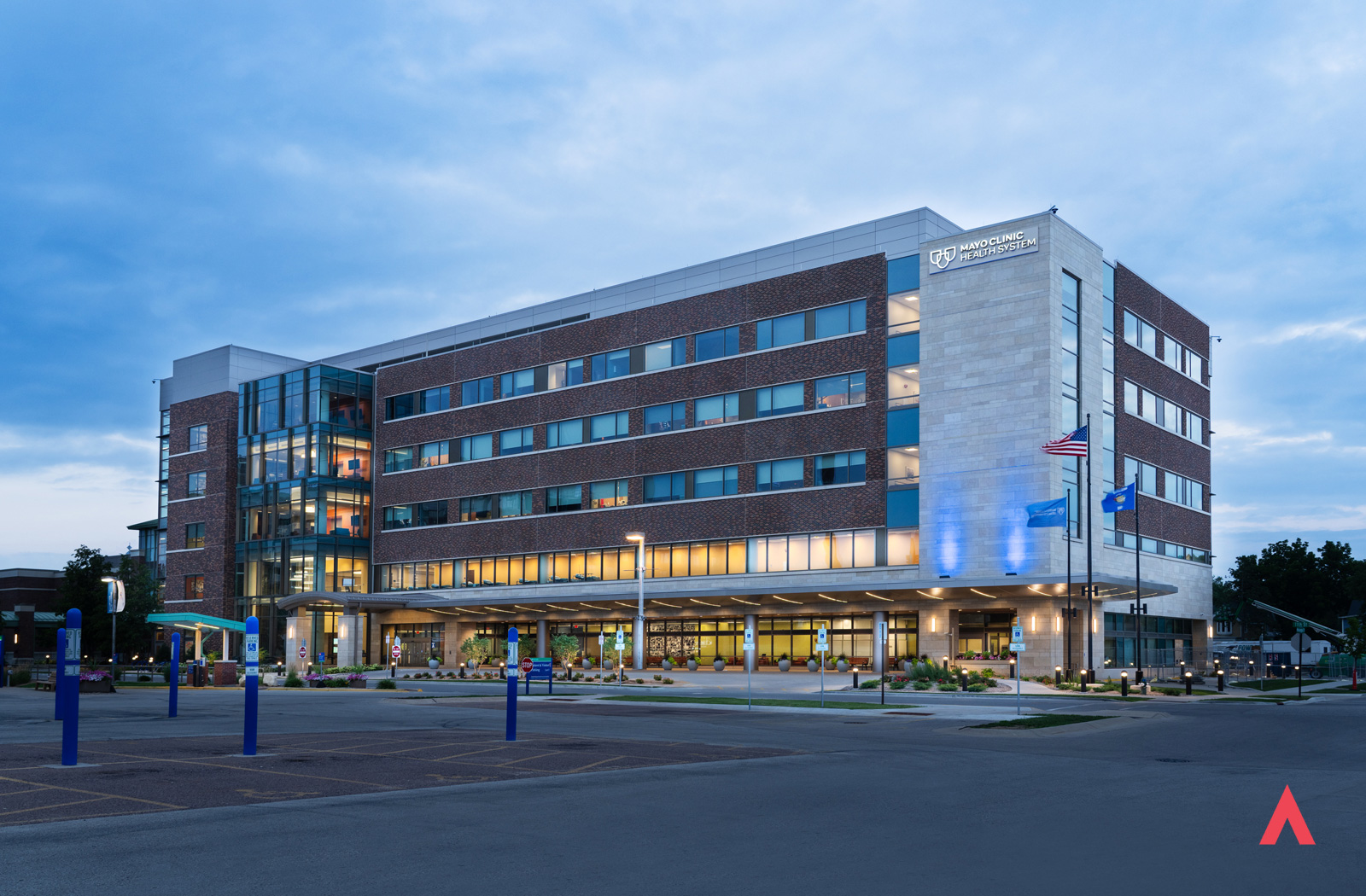
Darcy’s groundwater-based approach delivered the required thermal capacity with substantially fewer wells than a conventional borehole field would have required, illustrating both the scale at which healthcare geothermal can operate and the practical importance of a system configuration that works on the built-out, space-constrained campuses where hospitals are typically located.
Sustainability: Meeting Healthcare’s Growing Environmental Obligations
The healthcare sector accounts for roughly 8.5% of U.S. greenhouse gas emissions, and major health systems have made public commitments to reduce their environmental footprint, with many signing pledges for carbon neutrality by 2030 or 2040. Accreditation bodies, donors, community stakeholders, and regulatory frameworks are all part of the accountability landscape. Buildings are where the most actionable progress is available.
For healthcare organizations measuring emissions under the GHG Protocol, replacing combustion-based heating with geothermal takes Scope 1 HVAC emissions to zero, one of the most direct and verifiable paths to meaningful progress. On the Scope 2 side, geothermal’s 40 to 70% reduction in HVAC-related electrical consumption flows directly into lower indirect emissions, and the lower electrical demand means fewer renewable resources are required to offset HVAC consumption as health systems pursue broader clean energy strategies.
Healthcare-specific sustainability programs, including Practice Greenhealth and the Green Guide for Health Care, increasingly recognize geothermal’s contribution to facility environmental performance. LEED for Healthcare and ENERGY STAR certification for hospitals are recognized benchmarks that many health systems use to communicate their energy performance, and geothermal’s reduction of site energy use intensity (EUI) is one of the most direct paths to achieving and sustaining both.
Learn more about how geothermal HVAC supports sustainability goals and ESG reporting.
Frequently Asked Questions
Can geothermal support the redundancy requirements of hospital HVAC systems?
Yes. Geothermal systems can be designed with N+1 redundancy configurations that ensure no single equipment failure interrupts the building’s heating and cooling delivery. The underground well infrastructure provides a shared thermal resource with no single point of failure, and building-side heat pump equipment can be configured so that individual units can be serviced without taking the system offline. Darcy’s engineering team includes redundancy planning as a standard component of healthcare system design.
Is geothermal compatible with the ventilation requirements of ASHRAE 170?
Yes. ASHRAE Standard 170 governs the air-side performance of healthcare HVAC systems, including air change rates, pressure relationships, filtration, and environmental control parameters. Geothermal functions as the central plant heating and cooling source, providing conditioned water to the building’s air handling and distribution equipment. The air-side design is fully configurable to meet Standard 170 requirements regardless of the heating and cooling source, and a well-coordinated design achieves full compliance while capturing all of geothermal’s efficiency and sustainability benefits.
How does geothermal handle the cooling-dominant load profile of hospitals?
Healthcare facilities are among the most cooling-intensive building types, with significant internal heat gains from equipment, lighting, and clinical processes that require year-round cooling capacity. Groundwater-based geothermal systems are particularly well-matched to cooling-dominant applications. The stable temperature and high thermal capacity of groundwater provides an effective heat sink for rejecting large building heat loads efficiently, even during winter months. Darcy’s Dipole well configuration can deliver 200 or more tons of cooling capacity from a single well, enabling major clinical facilities to be served from a compact, high-capacity system.
How does geothermal work for a hospital campus with multiple buildings?
Healthcare campuses with multiple buildings are excellent candidates for geothermal thermal energy networks, where shared underground infrastructure serves multiple facilities from a common well field or aquifer resource. These configurations allow heating and cooling loads to be balanced across buildings, create economies of scale in well construction and equipment procurement, and provide a shared energy infrastructure that can grow with the campus over time. Darcy has experience designing systems for both individual healthcare buildings and multi-building campus configurations.
What does the geothermal installation process look like for an occupied hospital?
Well construction and horizontal piping installation are the primary site activities for a geothermal installation, and both can be managed with minimal disruption to an operating facility when properly phased. Darcy’s project team develops construction phasing plans specifically for occupied healthcare environments, coordinating with facilities operations, infection control (ICRA and PCRA protocols), and the project schedule to ensure that construction activities do not affect patient care areas. The mechanical room integration is typically the most schedule-sensitive phase and is coordinated to align with planned maintenance windows or system downtime where possible.
Can nonprofit hospital systems access the federal geothermal tax credit?
Yes. The IRA’s direct pay provisions allow tax-exempt organizations, including nonprofit hospital systems, to claim the Section 48/48E Investment Tax Credit as a direct payment from the U.S. Treasury rather than as a tax offset, making it fully accessible regardless of tax liability. The current credit structure, preserved under the OBBBA signed in July 2025, provides a base credit of 6% scalable up to 30% with prevailing wage and apprenticeship requirements, plus additional bonuses for domestic content and energy community siting. The full credit structure holds through 2032 before beginning to phase down.
The Right Time to Evaluate Geothermal for Your Facility
Healthcare organizations evaluating their long-term capital strategy are making decisions today that will shape their energy costs, emissions profile, and operational complexity for the next 50 years.
Darcy specializes in commercial geothermal that includes healthcare facilities, from individual medical office buildings to major regional hospitals and multi-building health system campuses. Our team of geologists, engineers, and builders brings the site-specific expertise needed to evaluate feasibility, model performance, and design systems that meet the reliability, regulatory, and sustainability standards that healthcare organizations depend on.
The starting point is a free site assessment. After providing your facility’s location, you’ll receive a geologically grounded picture of your project’s potential with no cost or obligation to move forward. Let’s get started.