Building History and Use
For decades, Minnesota’s State Emergency Operations Center operated out of a constrained facility in downtown St. Paul. The space was functional for day-to-day coordination but was never designed to support the sustained, multi-agency response that large-scale emergencies demand. Those limitations became difficult to ignore during the COVID-19 pandemic, which required an extended, statewide activation unlike anything the center had previously supported.
As emergency management demands continued to evolve, state leaders recognized that a purpose-built facility was the only path forward. In addition to daily coordination work, the new facility also needed to serve long-duration, full-scale activations that bring together local, tribal, state, federal, and private-sector partners in a secure, flexible, and reliable environment.
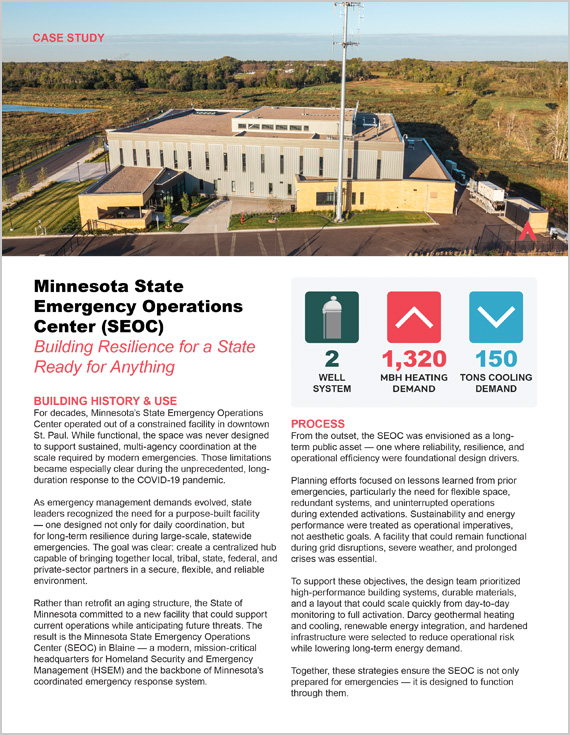
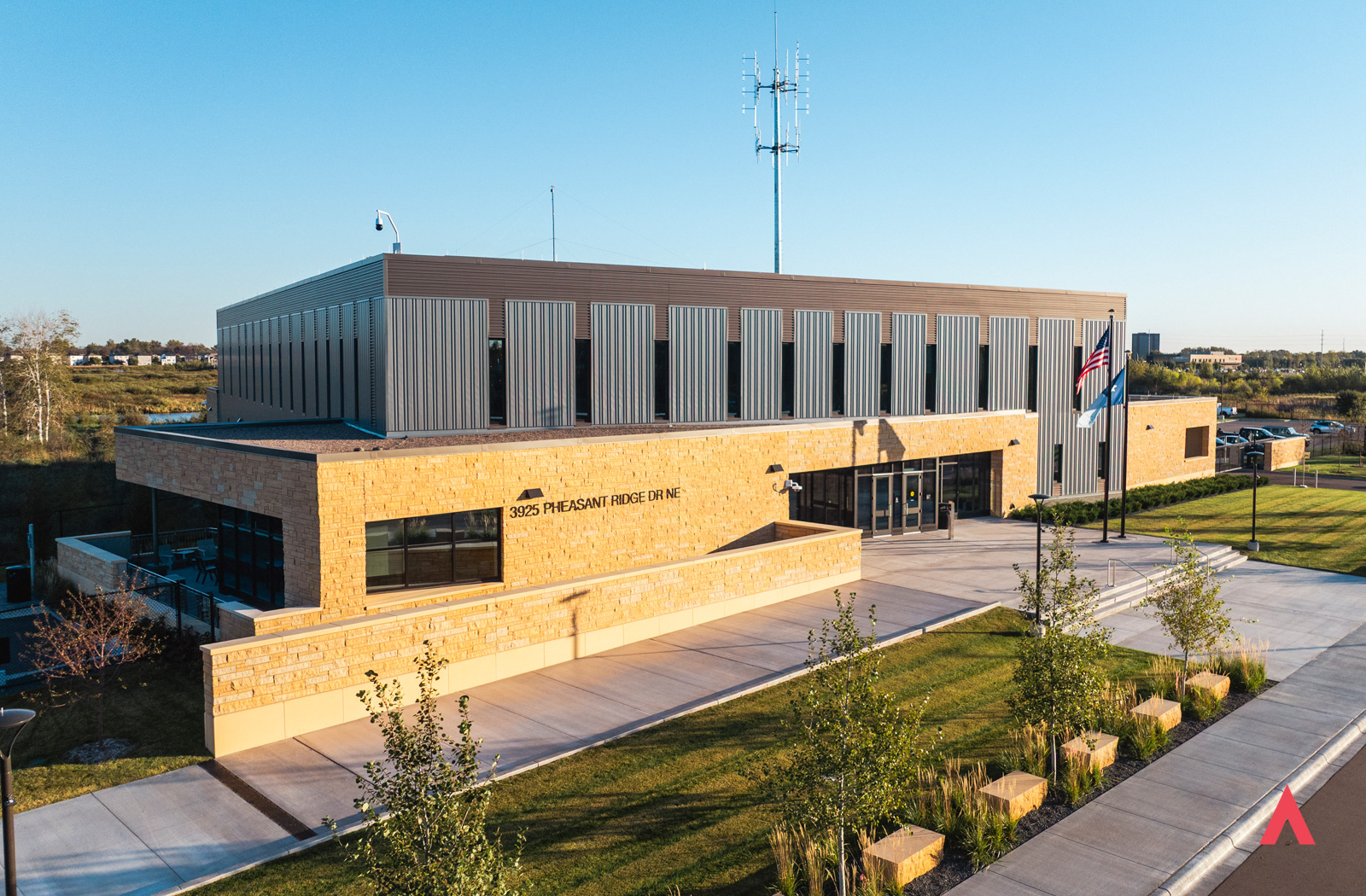
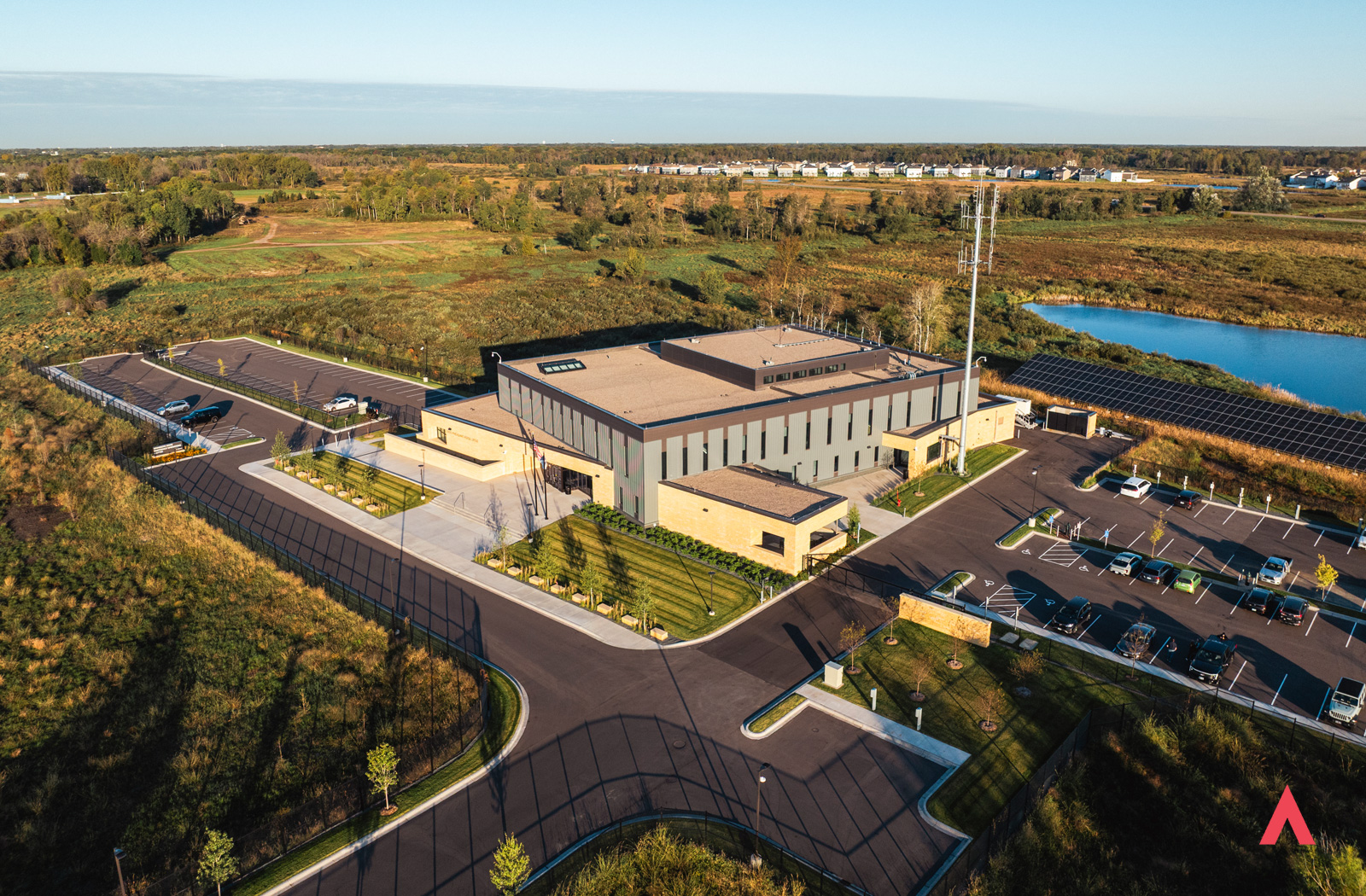
Rather than retrofitting the aging St. Paul location, the State of Minnesota committed to building new. The result is the Minnesota State Emergency Operations Center in Blaine, a modern, mission-critical headquarters for Homeland Security and Emergency Management (HSEM) and the central hub of the state’s coordinated emergency response system.
Process and Design Philosophy
From the outset, the SEOC was envisioned as a long-term public asset where reliability, resilience, and operational efficiency were foundational design drivers rather than secondary considerations.
Planning drew on lessons learned from prior emergencies, particularly the need for flexible space, redundant systems, and uninterrupted operations during extended activations. Sustainability and energy performance were treated as operational imperatives.
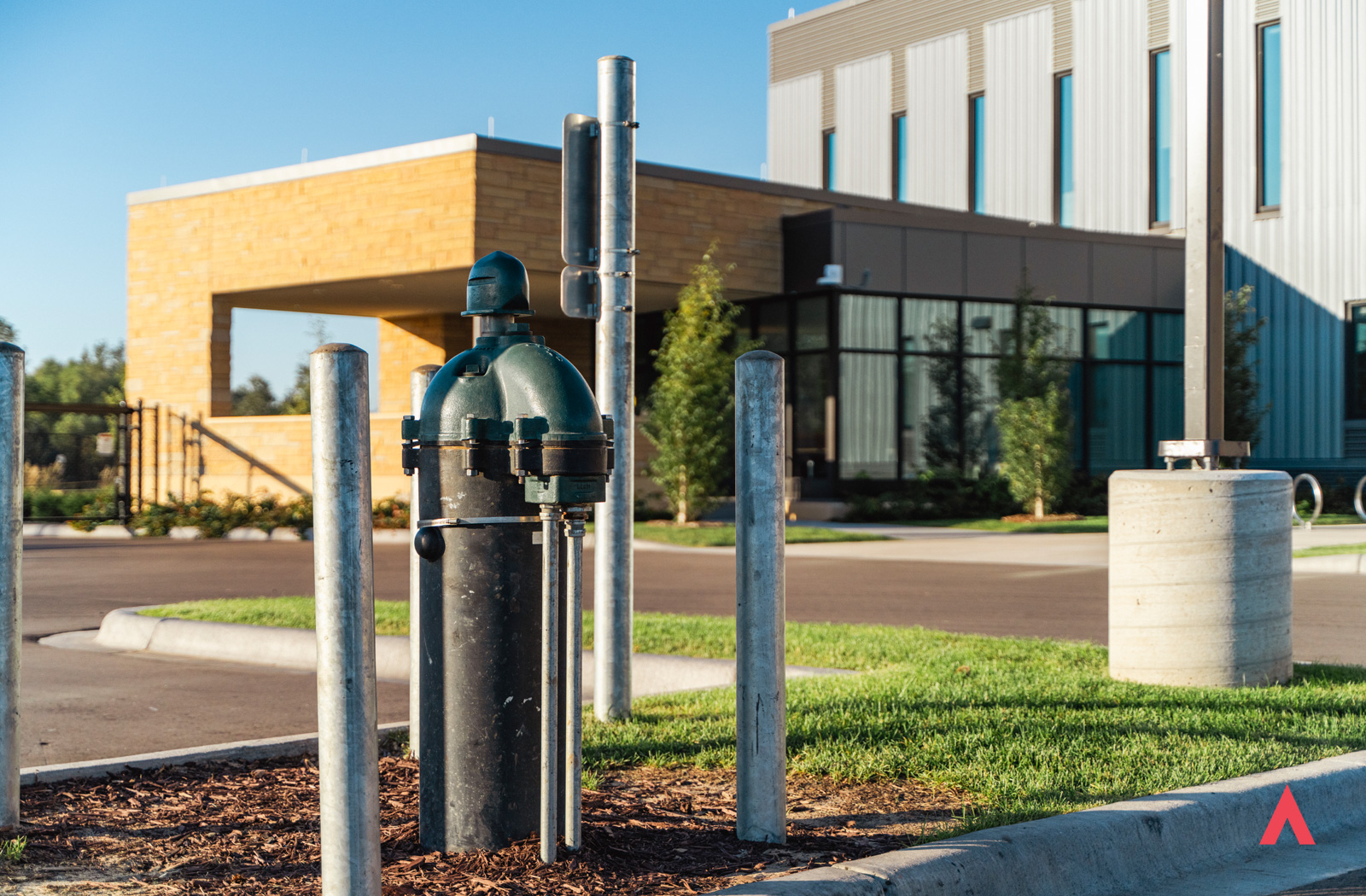
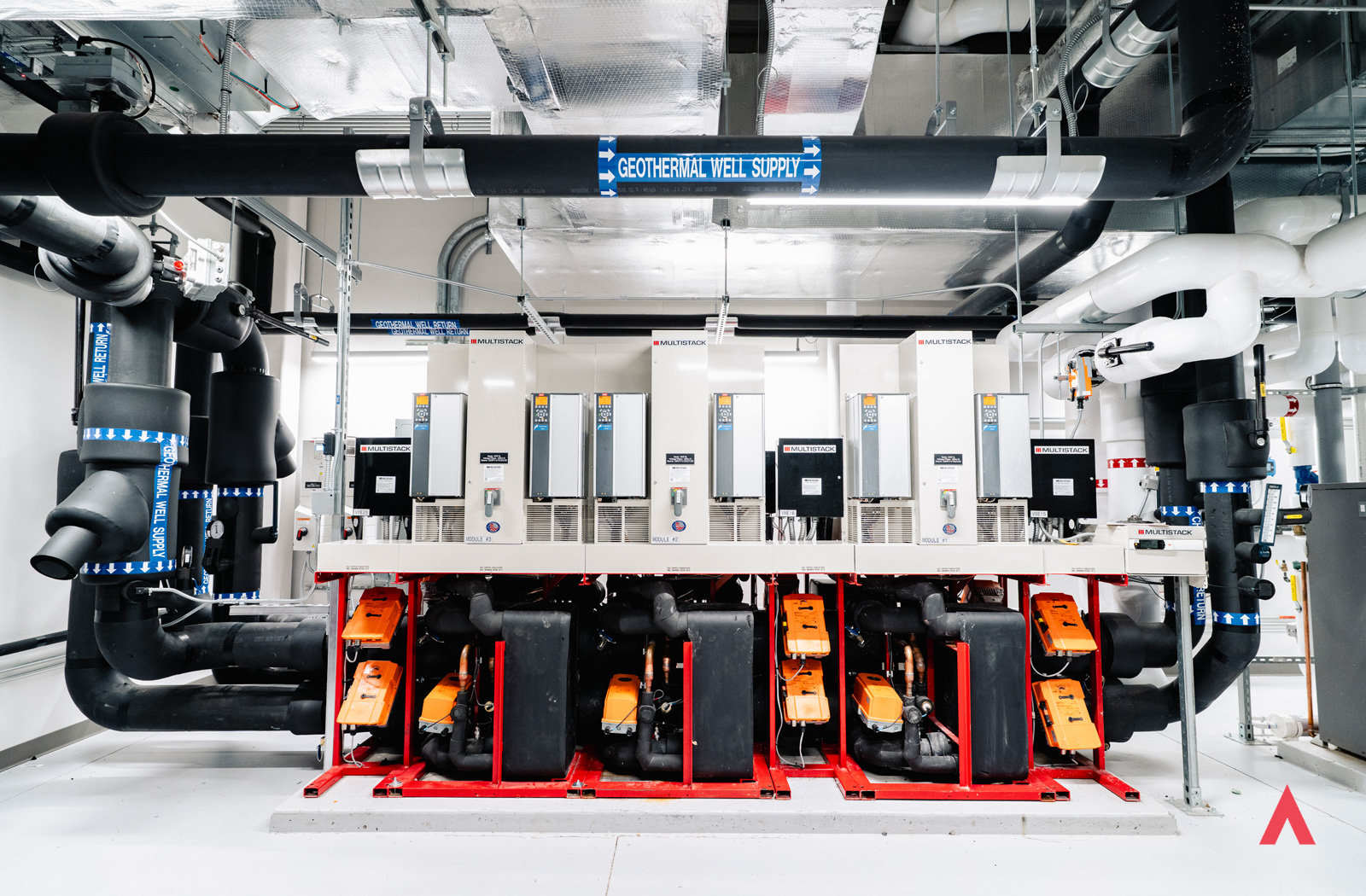
To support these objectives, the design team prioritized high-performance building systems, durable materials, and a layout that could scale rapidly from routine daily operations to full emergency activation. Darcy geothermal heating and cooling was selected alongside renewable energy integration and hardened infrastructure to reduce operational risk while lowering long-term energy demand. Together, these strategies ensure the SEOC is prepared for emergencies and built to function through them.
Design and Construction
Design development and construction of the new SEOC followed several years of pre-design analysis, site evaluation, and stakeholder coordination. A 20-acre site in Blaine was selected for its ability to accommodate secure operations, future expansion, and efficient access while avoiding the logistical constraints of a dense urban location.
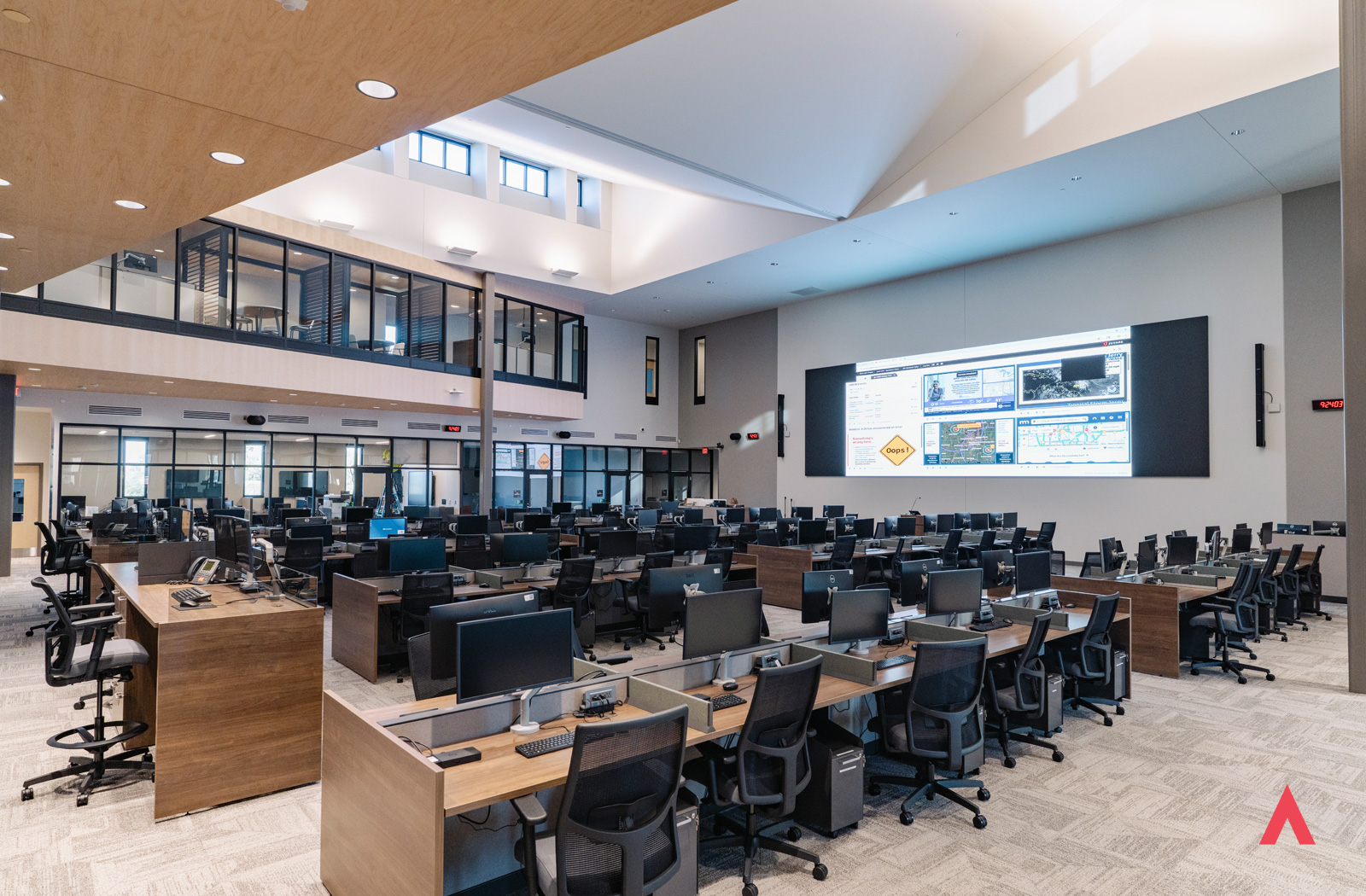
The facility spans approximately 36,000 square feet and is organized around a central operations core designed to support unified command, real-time situational awareness, and interagency collaboration. Open work areas, conference rooms, training spaces, and support areas are now arranged to allow rapid reconfiguration as incidents evolve in scale and complexity.
Construction officially began with a public groundbreaking in October 2023. Over the following two years, the project team delivered a hardened, highly efficient facility built to withstand extreme weather events including EF-3 tornado-level forces. Backup power systems, redundant communications infrastructure, and resilient building envelopes ensure continuous operation regardless of external conditions. The SEOC officially transitioned operations to the Blaine facility in 2025.
Engineered for What Comes Next
The Minnesota State Emergency Operations Center is a strategic investment in the state’s capacity to protect lives, infrastructure, and communities when it matters most.
By combining groundwater geothermal heating and cooling with thoughtful planning and resilient design, the SEOC is equipped to operate efficiently under normal conditions and reliably under extreme ones. The geothermal system’s independence from fossil fuels and its stable, ground-sourced performance make it well-suited for a facility that cannot afford downtime. Built to adapt, endure, and perform under pressure, the SEOC sets a new standard for emergency management infrastructure in Minnesota, while also modeling how mission-critical public facilities should be built.