
UndauntedK12’s “Ground-Source Heat Pumps in Schools: A Guide to Maximizing Energy Tax Credits” gives district administrations a framework for choosing Geothermal systems and optimizing the financials behind them.
Many school districts already know their existing HVAC equipment systems need work. What they don’t always have is a trustworthy way to decide what to replace it with — including a plan that weighs student health, energy costs, climate impact, and unfamiliar funding mechanisms. That’s the gap UndauntedK12 set out to close, and the result is Ground-Source Heat Pumps in Schools: A Guide to Maximizing Energy Tax Credits — a guide that has quickly become one of the most useful decision-making tools for those groups.
Darcy builds geothermal systems that heat and cool buildings using groundwater beneath our feet. But a great system only gets installed if a district can first make a confident, well-informed decision the community can support. UndauntedK12’s guide helps them do exactly that — and a few hours down the road from us, Winona, MN, shows the choice paying off.
What the Guide Provides Decision-Makers
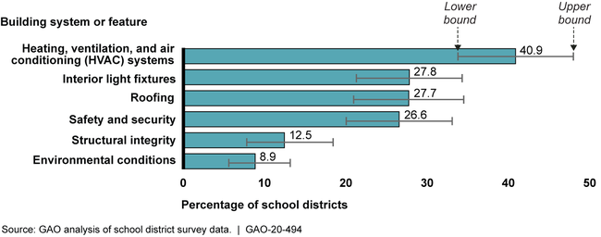
The guide’s strength is that it doesn’t sell a product — it teaches a framework. It starts from an uncomfortable fact: roughly 41% of districts need to update or replace HVAC in at least half their schools, and most are still running legacy systems that burn fossil fuels on site, often without delivering adequate cooling, ventilation, or filtration. Then it gives practical considerations for how to navigate the process step by step.
Three principles anchor the whole thing. A modern school HVAC system should be built on all-electric heating and cooling, high-performance ventilation, and high-performance filtration — and for most schools, some form of heat pump is the centerpiece. From there, the guide lays out why that is the best solution for many schools:
- It solves cooling, not just heating. A heat pump is a two-for-one system that finally answers the overheated-classroom problem tied to lost learning and weather closures.
- It cleans the air. No on-site combustion means better indoor and outdoor air quality — for students, staff, and the surrounding community.
- It’s dramatically more efficient. The guide notes heat pumps can be far more efficient than fuel-burning systems, translating directly into operating-budget savings.
- It’s safer. No gas means no gas leaks, no carbon monoxide, fewer hazards in a building full of children.
- It builds resilience and cuts carbon. Paired with weatherization and renewables, modern HVAC helps schools ride out extreme weather while positioning them as climate leaders.
Crucially, the guide also tackles the question that stops most projects cold: how to pay for it. It walks districts through the federal incentives — the Investment Tax Credit, direct/Elective Pay, domestic content, and energy community bonuses — that together can offset a large share of a geothermal heat pump’s up-front cost, the single biggest barrier districts cite.
That’s the part we see make or break projects. The engineering is rarely the obstacle. The decision-making and the financing are. This guide takes on both.
Winona: The Framework, In the Real World
Washington-Kosciusko and Jefferson Elementary Schools were both built in the 1930s, both listed on the National Historic Register, and both stuck with outdated HVAC — no cooling, poor ventilation, uncomfortable in spring and fall, unusable in summer, and a real health concern in extreme weather. Winona Area Public Schools wanted to modernize two neighborhood landmarks without erasing them.
The district’s decision tracks the guide’s framework almost point for point: it chose all-electric, high-performance heating and cooling, centered on heat pumps, with the air quality and efficiency benefits front of mind. Working with Wold Architects & Engineers and Kraus-Anderson, Winona selected groundwater-enabled geothermal and brought Darcy in to design and deliver the well fields:
- Washington-Kosciusko Elementary: a 4-well system serving 4,080 MBH of heating demand and 310 tons of cooling demand.
- Jefferson Elementary: a 5-well system serving 4,320 MBH of heating demand and 200 tons of cooling demand.
Both systems decarbonize the buildings by electrifying their heating and cooling, fit the schools’ existing footprints, and are built to last — a typical boiler runs about 25 years, while a heat exchange well can last up to 75. The renovations ran through summer 2023 and were complete for the 2024-25 school year. The district reports exactly the outcomes the guide promises: better air quality, more comfortable classrooms, and falling energy costs.
Then came the funding payoff the guide is designed to unlock. In March 2026, Winona Area Public Schools received a $5,523,230 reimbursement check from the IRS for the two systems, through Elective Pay — earning a bonus credit for meeting prevailing wage and apprenticeship requirements, and giving 12 apprentices hands-on experience with next-generation geothermal along the way.
“We were always hopeful that the projects would qualify for the tax credit, but we never counted on it,” said Superintendent Brad Berzinski. “Now that the funding is secured, it opens up a world of possibilities for strategic, one-time capital investments that will benefit our students and staff for years to come.”
That’s the difference a good framework makes. A district shouldn’t have to hope a multi-million-dollar reimbursement materializes. With the right guidance, it can plan the project — and the financing — with confidence from the start.
Why We’re Highlighting It
We’re engineers, and we love the elegant part of this work — a handful of wells replacing a half-acre borefield, a 90-year-old building quietly electrified. But decarbonizing the country’s school buildings was never only an engineering problem. It’s a decision problem and a financing problem too, and those are exactly the barriers that keep good projects from ever breaking ground.
UndauntedK12’s HVAC guide takes those barriers down. It gives district leaders, school boards, and facilities teams a clear-eyed way to evaluate their options before a single well is drilled — and it points them toward the funding that makes the better option affordable. It’s the resource we point districts to when they’re earlier in the journey than a site assessment, when the real question isn’t can this work on our site but how do we make the right call, and pay for it.
Winona answered both questions. So can the next district.
If your district is rethinking its HVAC, start with UndauntedK12 and RMI’s guide. When you’re ready to find out what your site can deliver, schedule a free site assessment with Darcy.