
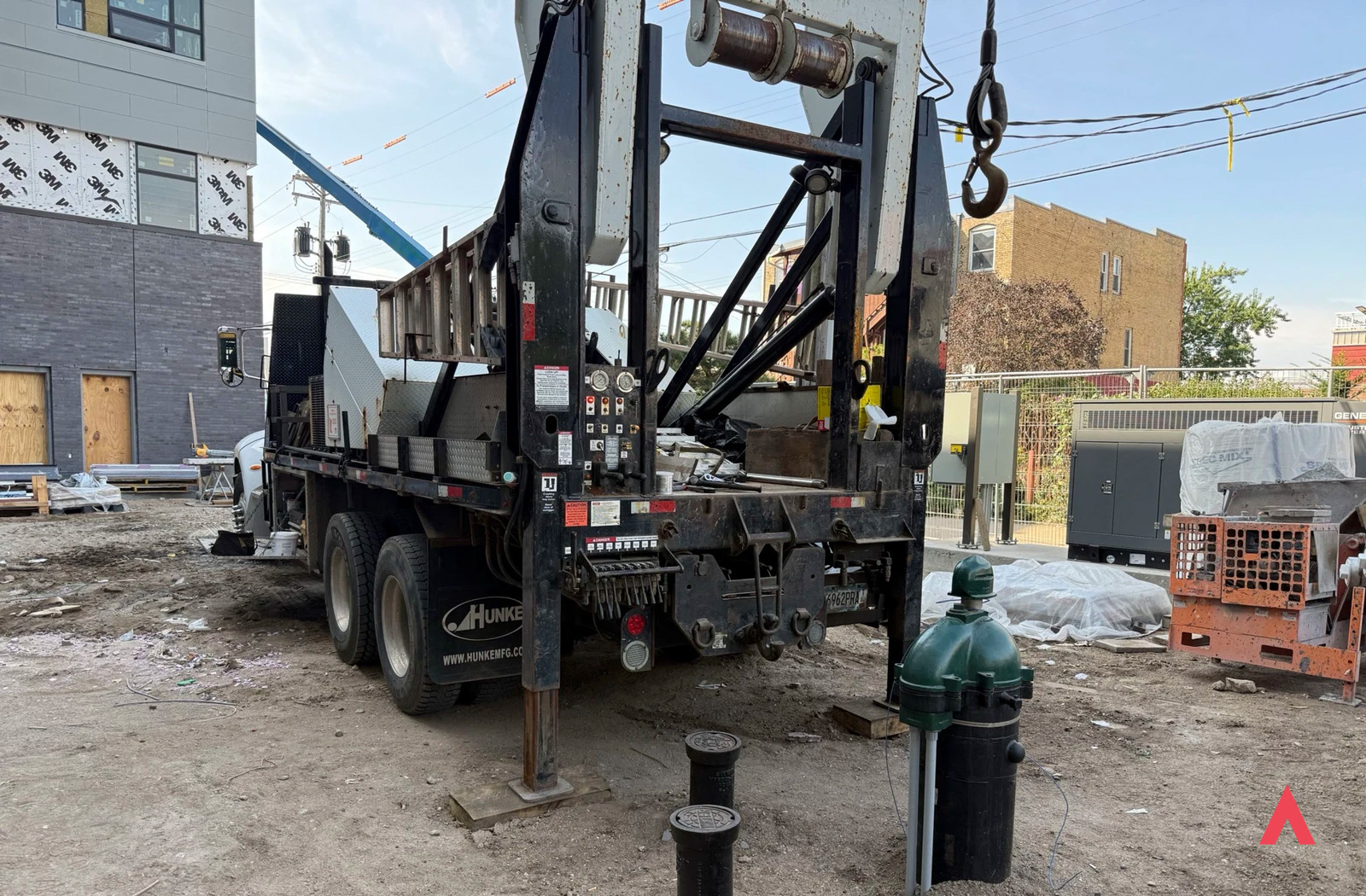
For facility managers, project managers, and building owners evaluating geothermal for the first time, common questions at the outset typically center around what the process looks like, how long each stage takes, and how much disruption they should prepare for within their day-to-day operations.
The honest answer is that every project is site-specific. Geology, building type, system size, and site constraints all combine to help shape the timeline, but the overall sequence of most commercial geothermal projects follows a clear, well-defined path. Understanding that path is one of the most useful things a project team can do before engaging with a geothermal contractor.
In this piece, we will walk through Darcy’s six-step project process, from initial site evaluation and testing through long-term system optimization and maintenance.
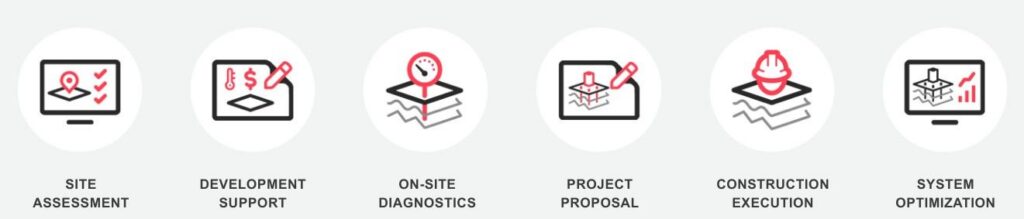
Step 1: Site Assessment
Since the basis of our systems is so closely tied to groundwater, every project starts with geology. Before any engineering, budgeting, or design work takes place, Darcy’s geology team evaluates the site to determine whether geothermal is viable and, if so, what type of system is the right fit.
During this process, a professional geologist reviews the physical characteristics of the subsurface at the location, including soil and rock formations, target aquifers, expected groundwater productivity, and the regulatory requirements and permitting landscape for the relevant jurisdictions. The output is a clear recommendation to either proceed with a specific technology, pursue further on-site diagnostics, or (in the rare case the site is not suitable) redirect the project team before significant resources are committed.
All consulting throughout this stage is provided at no cost. Darcy’s site assessment is the starting point of all projects, and requires nothing more than an address or site coordinates to get underway.
Typical duration: 1–2 weeks from submission to initial findings.
Step 2: Development Support
Once the site has been assessed and the team has agreed on the best path forward, Darcy’s engineering team steps in to support the development phase. This typically involves a detailed analysis that estimates the thermal capacity of the recommended system configuration for the specific site. For a groundwater-based system, this means projecting the expected tonnage or MBH output of a Dipole well or other well configuration based on the site’s hydrogeological characteristics.
While this is happening, load analysis also takes place to help understand the building’s heating and cooling requirements, which allows Darcy to estimate the number of wells needed and the appropriate system size. From there, a conservative project budget is produced so the owner has a reliable cost picture before committing to on-site diagnostics or construction.
This stage is also where the project team, the mechanical engineer of record, and Darcy align on system configuration, building integration requirements, and any development or permitting milestones that need to be addressed before construction can begin.
Typical duration: 2–4 weeks, depending on complexity of load analysis and engineering coordination required.
Step 3: On-Site Diagnostics
The majority of Darcy’s projects require some form of on-site evaluation before final system design can be confirmed, which helps validate the assumptions from the desktop assessment with direct physical data from the site.
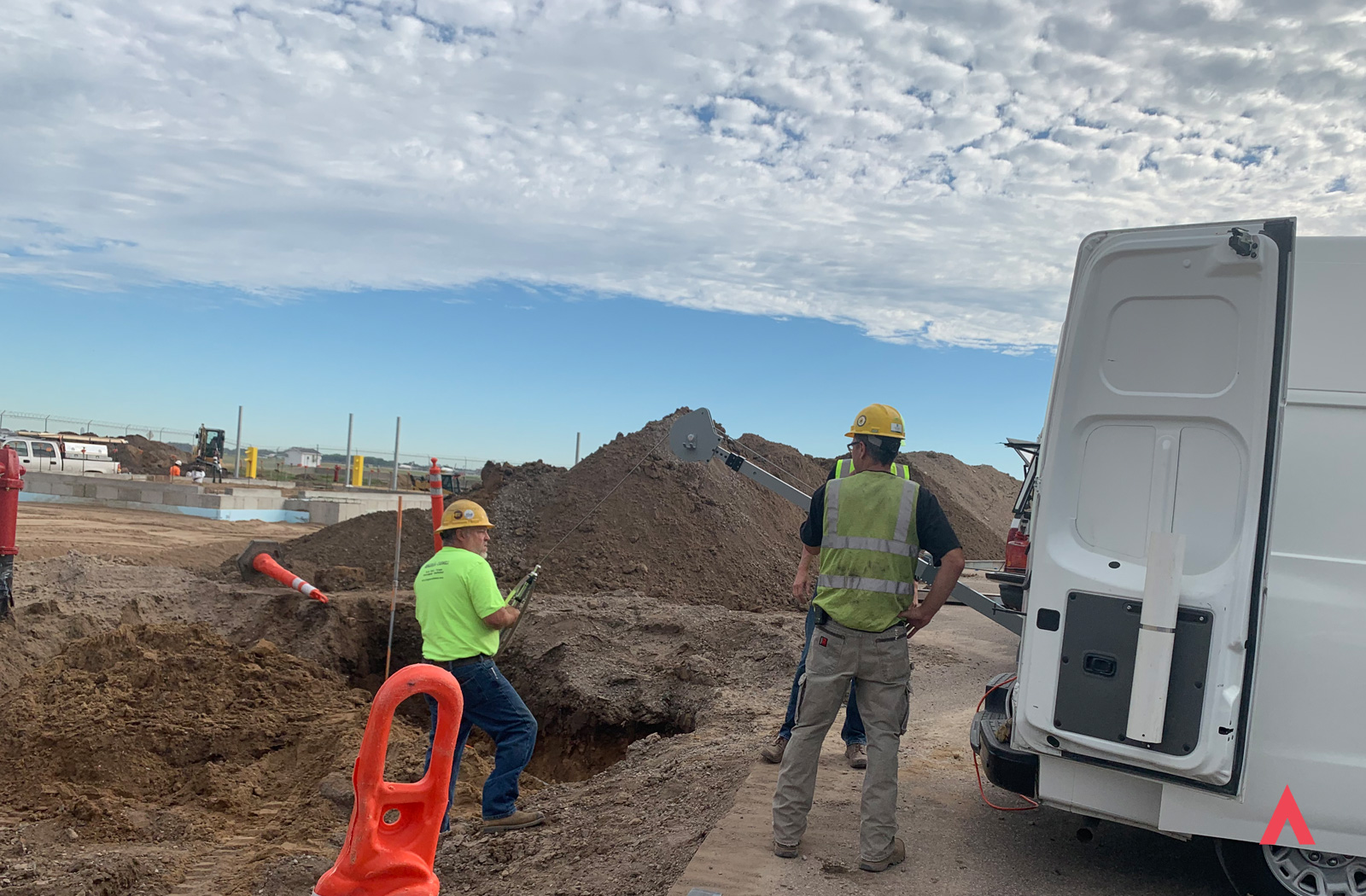
Depending on site conditions and the recommended system type, diagnostics can range from geophysical analyses at the surface to full pilot well drilling, pump testing, and physical logging of subsurface conditions. For groundwater-based systems, the goal is to confirm aquifer productivity at the target depth, characterize the subsurface geology, and verify that the site can support the system capacity required. This data directly informs well depth, spacing, pump specifications, and final system design.
Darcy oversees all elements of the on-site diagnostics, including coordinating with drilling contractors, collecting all relevant data, and delivering the results report to the owner and project team. This work is all performed at cost to keep the path to a confirmed project as accessible as possible.
Typical duration: 2–6 weeks, depending on test scope and drilling schedule.
Step 4: Project Proposal
With on-site conditions verified and the physical attributes of the location confirmed, final system design and formal proposal preparation can begin. The project proposal covers all scopes of work within Darcy’s scope, typically including geothermal system construction outside the building, startup, and commissioning of installed equipment after substantial completion.
Proposal preparation involves selecting drilling and construction partners with the relevant capabilities and experience for the specific location, assembling subcontractor pricing, and producing a detailed scope and schedule. This process typically takes one to two weeks from when the owner provides notice to proceed.
The proposal stage is also the right time for the project team to confirm the involvement of a mechanical contractor for the building-side equipment installation, since that scope runs parallel to Darcy’s exterior work and requires coordination for startup and commissioning.
Typical duration: 1–2 weeks from notice to proceed.
Step 5: Construction Execution
The construction stage is where the geothermal system takes its physical form. Darcy’s scope covers the exterior geothermal exchange system, which includes the drilled well infrastructure, the horizontal piping that connects the wells to the building, and the mechanical room connection point where the ground loop interfaces with the building’s HVAC equipment.
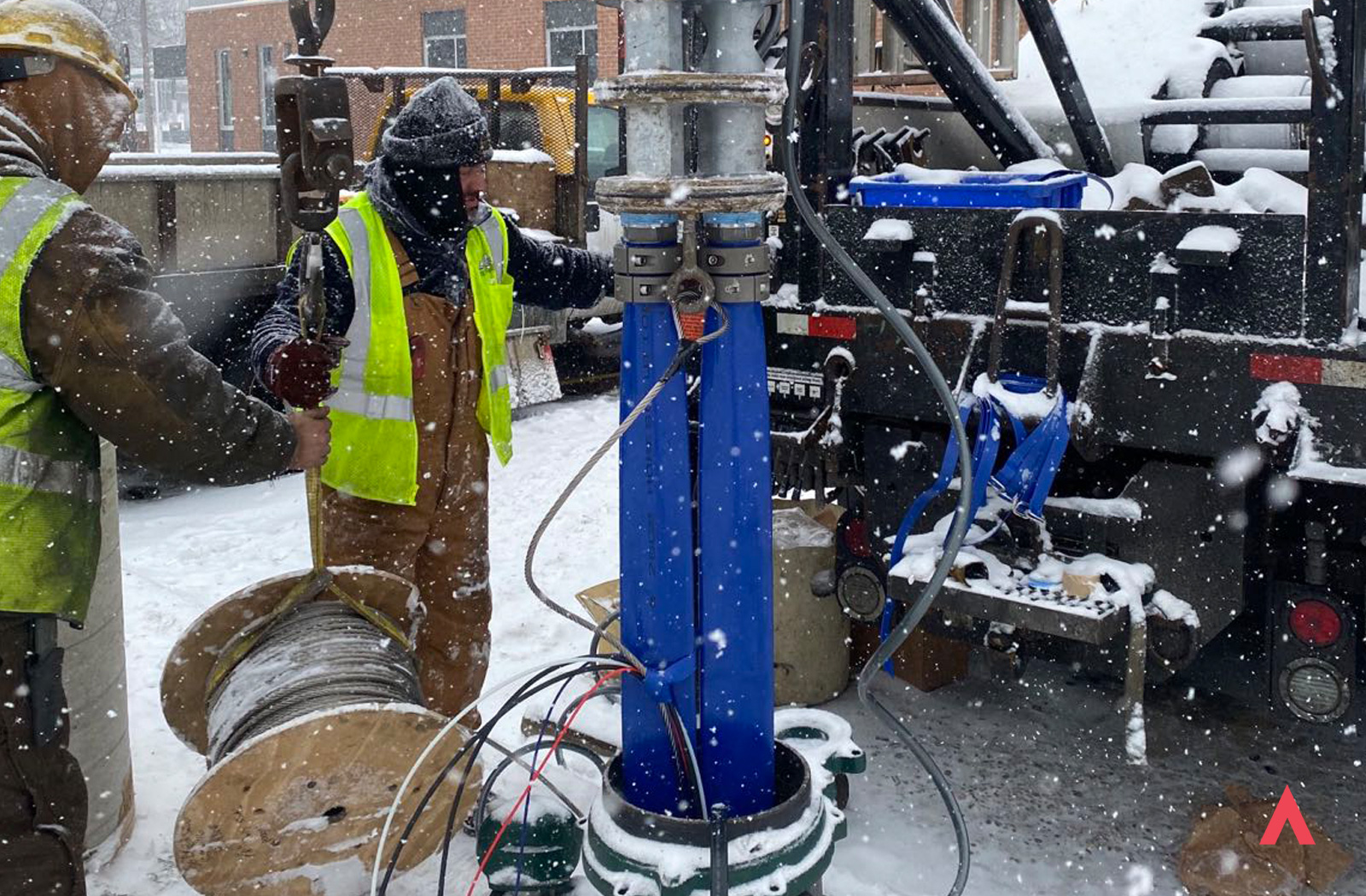
For dipole groundwater-based systems, construction typically begins with well drilling. After drilling to the specific aquifer targeted, well construction is finalized and followed by well development. Development is the process of pumping the well to eliminate all particulate matter down well and can deviate in timing depending on the specific geologic conditions of that location. Once the vertical elements are complete, horizontal piping is installed from the wells to the building and connected to the mechanical room header.
Applied equipment inside the building (e.g., water-to-water heat pumps, central plant equipment, distribution components, etc.) is installed by the mechanical contractor. Darcy does furnish some equipment used for the geothermal closed loop for use in the building, but installed by the mechanical contractor, as well. After substantial completion of both the exterior and interior work, Darcy partners with the mechanical contractor and temperature controls provider to complete startup and commissioning, verifying that the system is operating to design specifications before handoff.
For retrofit projects and occupied facilities, construction phasing is planned in advance to minimize operational disruption. Darcy’s team has experience managing geothermal installations on active campuses, in operating healthcare facilities, and alongside ongoing construction on complex multi-phase projects.
Typical duration: 8–20 weeks, depending on system size, site conditions, and construction schedule coordination.
Step 6: System Optimization
A well-engineered geothermal system is designed to perform reliably for decades, but realizing that performance requires the facilities team to know how to operate it. Geothermal systems are not yet common enough that most facility operators have prior experience with them, and Darcy accounts for that in our project process.
After project completion, Darcy provides on-site training for facilities staff, covering system operation, monitoring best practices, and routine maintenance expectations. The Darcy data monitoring platform tracks system performance in real time, providing alerts to owners and operators when a system condition requires attention. Over time, Darcy plans to expand proactive data management services to include performance optimization and scheduled O&M recommendations based on system operating data.
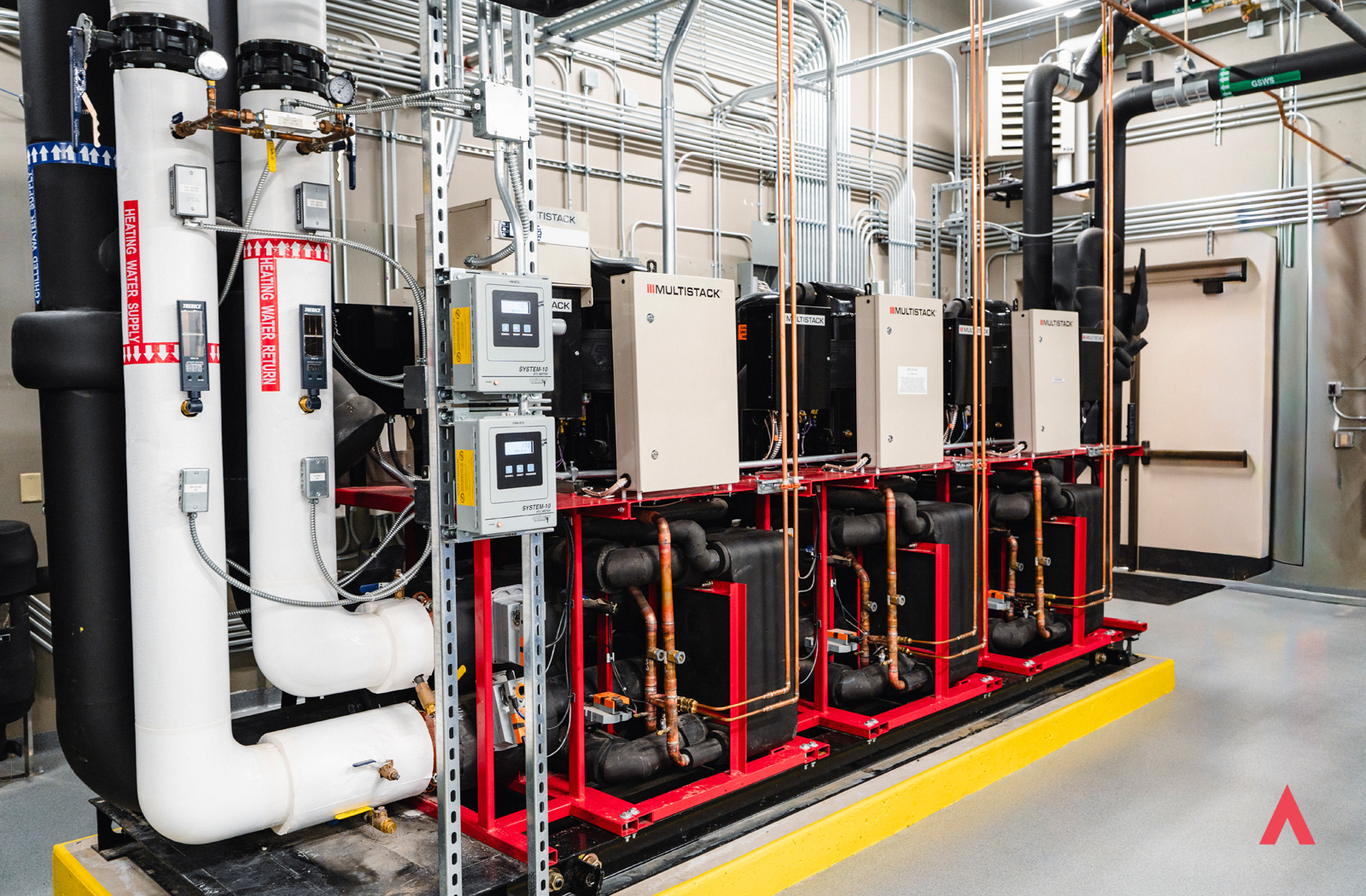
The underground well infrastructure in a properly designed system requires minimal intervention over its 50-plus-year service life. Building-side heat pump equipment follows standard preventive maintenance intervals, and any service can be completed by qualified mechanical contractors without specialized geothermal expertise.
Project Timeline: What to Plan For
The list below reflects typical durations for each phase of a Darcy project. Actual timelines vary based on site complexity, system size, regulatory requirements, and project team coordination.
- Site Assessment: 1–2 weeks
- Development Support: 2–4 weeks
- On-Site Testing: 2–6 weeks
- Project Proposal: 1–2 weeks
- Construction Execution: 8–20 weeks
- System Optimization: Ongoing
From initial site submission to system startup, a straightforward project on a well-characterized site can be completed in as little as six months. Complex projects with phased construction, multiple buildings, or significant regulatory coordination may take 12 to 18 months or longer. The earlier a project team engages with a geothermal contractor, the more flexibility there is to plan around scheduling constraints.
Frequently Asked Questions
How long does a commercial geothermal installation take from start to finish?
A typical commercial geothermal project runs 6–12 months from initial site assessment through system startup, though complex projects can take longer. The largest variable is construction duration, which scales with system size and site conditions. Engaging a geothermal contractor early on in a project’s development phase provides the most flexibility for schedule planning.
Does the building need to be unoccupied during geothermal installation?
No. Geothermal well drilling and exterior piping installation can generally proceed while a building remains occupied, particularly when construction is phased in coordination with facilities operations. For healthcare, education, and other sensitive occupancy types, Darcy’s project team develops specific phasing plans to avoid interference with building operations. The most schedule-sensitive work is the mechanical room tie-in, which may require brief coordination with the building’s existing HVAC system.
What testing is required before a geothermal system can be built?
Most projects require some level of on-site testing to confirm the site’s geological and hydrogeological conditions before final system design begins. For groundwater-based systems, this typically includes pilot well drilling and aquifer testing to verify productivity, depth, and subsurface conditions. The scope and duration of testing depends on the site and system type. Darcy manages all testing activities and provides a full results report and presentation to the project team before moving to proposal.
What is Darcy’s scope of work versus the mechanical contractor’s?
Darcy’s scope covers the geothermal exchange system outside the building, including well construction, horizontal distribution piping, and the mechanical room connection point. The mechanical contractor handles the building-side HVAC equipment (e.g., heat pumps, distribution equipment, controls, etc. – some equipment installed in the building Darcy furnishes), with Darcy coordinating closely during startup and commissioning to ensure the full system operates as designed. Darcy can assist the project team in identifying and coordinating with mechanical contractors experienced in geothermal system integration.
What is the cost structure for the early project phases?
Darcy’s site assessment and all consulting through the development support phase are provided at no cost to the project team. On-site diagnostics are performed at cost, because Darcy’s goal is to confirm project viability and remove barriers to geothermal deployment. Construction is contracted separately after the proposal stage.
What ongoing maintenance does a geothermal system require?
The underground well infrastructure in a properly designed system is largely passive and requires minimal maintenance over its service life of 50 years or more. Typical maintenance includes replacement of pumps every 15 years, closed-loop fluid testing, and a few other easy-to-perform actions. Building-side heat pump equipment follows standard preventive maintenance schedules comparable to conventional commercial HVAC equipment. Darcy provides system training at project completion and ongoing performance monitoring through its data platform, with alerts sent directly to facility operators when system attention is needed.
Start with a Site Assessment
The first step in any geothermal project is to understand what the site can support. Darcy’s site assessment is free, requires only an address or site coordinates, and typically delivers initial findings within one to two weeks. It’s the most efficient way to move beyond curiosity to obtain a clear, informed picture of your project’s potential.