
Educational facilities occupy a unique position in the commercial geothermal market. School buildings are typically owned and operated by public entities with long planning horizons, substantial energy budgets, and real accountability to the communities they serve. University campuses face growing pressure from students, faculty, boards, and accreditation bodies to demonstrate meaningful progress on sustainability. And virtually every K-12 district and higher education institution in the country is looking for ways to reduce operating costs without compromising the quality of the learning environment.
Geothermal heating and cooling addresses all of these pressures simultaneously, and the characteristics that define most educational facilities make them among the strongest geothermal candidates in the commercial market. This piece covers why that is, what the financial case looks like, and what educational institutions should know before evaluating geothermal for their next capital project.
Why Educational Facilities Are Built for Geothermal
Long Building Lifecycles
School buildings are designed to last, with most K-12 facilities built today being able to serve students for 40–60 years or more, and the mechanical systems installed during original construction or a major bond-funded renovation will define the building’s energy profile for decades.
Geothermal systems are engineered to match that horizon. Underground well infrastructure carries a service life of 50-plus years, and building-side heat pump equipment typically runs 20–25 years before replacement. When a school district or university evaluates HVAC over the full life of a building rather than just the upfront capital cost, geothermal’s long-term operating cost advantage is substantial.
Predictable, Budget-Driven Decision-Making
Public school districts and state universities operate on multi-year budgets with defined capital planning cycles. Bond referendums, deferred maintenance programs, and state facility funding all follow predictable timelines.
Geothermal fits well into this environment because its financial case is durable, in that the energy savings, the reduced maintenance burden relative to conventional systems, and the incentive stack are all quantifiable well before a project goes to bond or procurement. For facilities directors and CFOs building a capital investment case, geothermal’s numbers hold up under the kind of scrutiny public projects require.

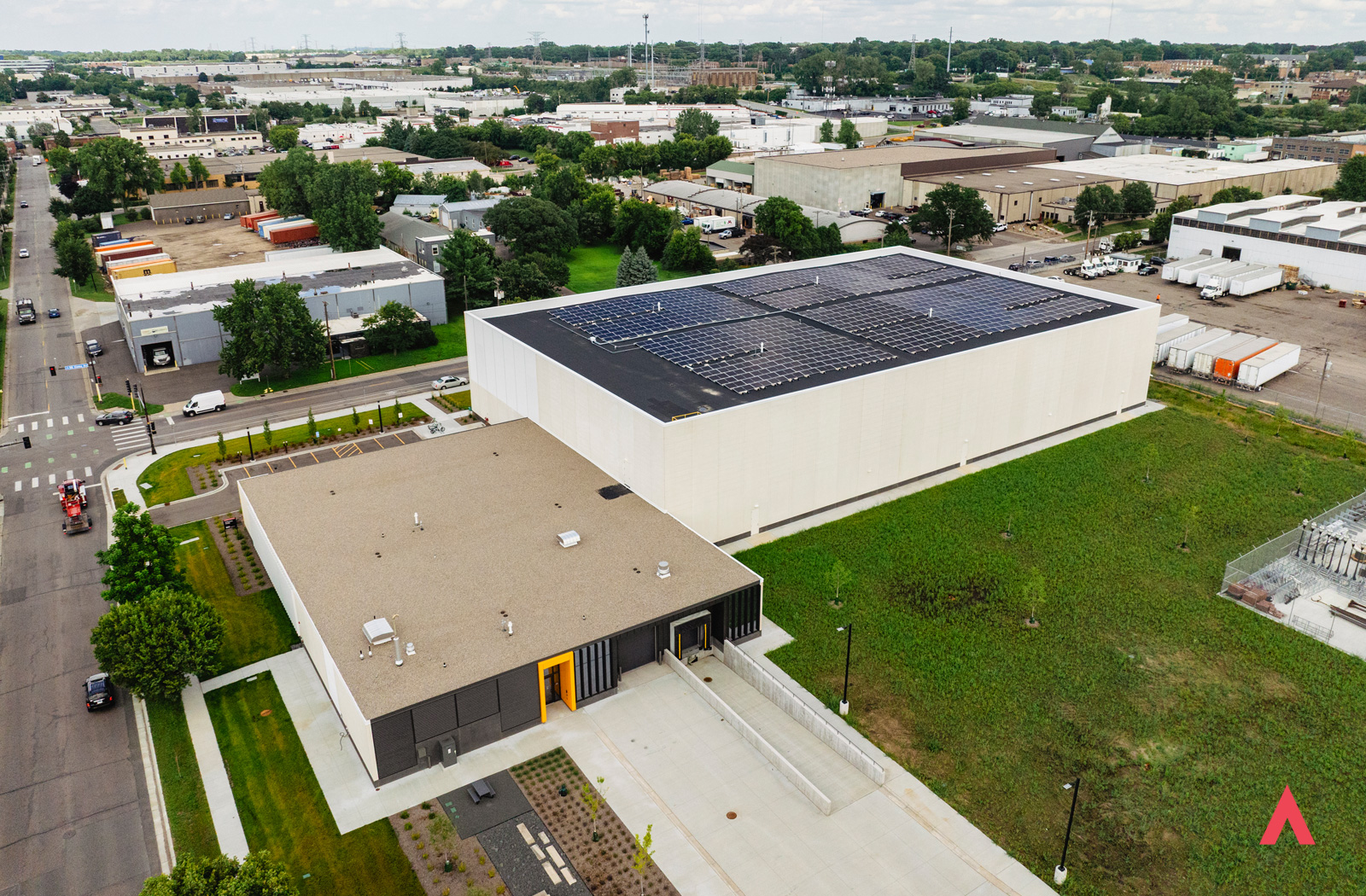
University of Minnesota Offsite Collections Facility (OCF) Geothermal System
COLLEGES & UNIVERSITIES
Space-Constrained Campuses Are No Longer a Barrier
One of the historic objections to geothermal for schools and universities is the assumption that it requires large amounts of open land for borehole fields. That constraint has been substantially reduced by groundwater-based system configurations.
Darcy’s groundwater approach can deliver substantially more heating and cooling capacity per well than a conventional closed-loop borehole, making geothermal viable on built-out school campuses, urban K-12 sites, and dense university districts where open land simply doesn’t exist. For campuses with suitable aquifer resources below them, the wellfield footprint can fit within a parking lot, courtyard, or utility corridor.
Consistent, Manageable Load Profiles
Educational buildings follow predictable occupancy schedules, with clear peaks during school hours and significant load reduction during nights, weekends, and summer months.
This predictability supports accurate system sizing, straightforward energy modeling, and well-managed operating schedules. It also means that geothermal’s efficiency advantage is realized consistently during occupied hours, when the system is running at the utilization rates where its performance is strongest.
The Financial Case for Educational Institutions
Lower Long-Term Operating Costs
With a coefficient of performance (COP) typically ranging from 4.0–8.0 or higher, geothermal systems deliver three to eight units of heating or cooling energy for every unit of electrical energy consumed. For a school district operating dozens of buildings or a university with millions of square feet of conditioned space, that efficiency margin translates into meaningful annual savings that compound over the life of the system. Eliminating natural gas from the HVAC equation also removes exposure to fuel price volatility, making long-term energy budgeting more predictable.
Federal Tax Credits with Direct Pay for Public Institutions
The federal Investment Tax Credit (ITC) for commercial geothermal, under Section 48/48E of the Internal Revenue Code, provides a base credit of 6% scalable up to 30% with prevailing wage and apprenticeship requirements met, plus additional bonuses for domestic content and energy community siting.
For public school districts, state universities, and other tax-exempt educational institutions, the Inflation Reduction Act’s direct pay provisions allow the ITC to be claimed as a direct cash payment from the U.S. Treasury, regardless of tax liability. This is a significant provision that makes the full economic value of the ITC accessible to public entities that previously had no mechanism to use tax credits.
The One Big Beautiful Bill Act (OBBBA), signed in July 2025, explicitly preserved the Section 48/48E ITC for geothermal heat pump systems. The current credit structure holds through 2032 before beginning to step down, giving school districts and universities evaluating geothermal for capital projects a defined window to capture the full credit value.

Grant Programs and Incentive Stacking
Beyond the ITC, educational institutions have access to several additional funding sources that can meaningfully improve geothermal project economics, including:
- USDA Rural Energy for America Program (REAP): Available to eligible rural institutions for renewable energy systems, including geothermal. Grants cover up to 50% of eligible project costs.
- EPA Greenhouse Gas Reduction Fund: Targets high-impact clean energy projects in underserved communities, which can include public school districts in qualifying areas.
- State energy offices: Many states administer their own clean energy grant and rebate programs for public buildings. Eligibility and program structure vary by state.
- School bonds and referendums: Capital projects funded through voter-approved bond measures can incorporate geothermal system costs, with the long-term operating savings used to demonstrate fiscal responsibility to voters.
Stacking the federal ITC direct pay with state grants and bond financing can dramatically improve the net cost of a geothermal project, sometimes reducing the effective upfront cost by 40% or more before energy savings are even considered.
Bond-Friendly Lifecycle Economics
When school districts go to voters for facility bond referendums, the projects that succeed are those with a clear, defensible case for long-term value. Geothermal systems, with their 50-plus year underground infrastructure and well-documented energy cost savings, make a strong case for inclusion in capital programs. The operating savings over the bond repayment period can be modeled with confidence, and the sustainability narrative resonates with communities that expect their school districts to make responsible long-term investments.
Meeting Educational Sustainability Commitments
Sustainability expectations in higher education have moved well beyond voluntary aspirations. Many universities have made formal pledges for carbon neutrality by 2030 or 2040, signed on to the American College and University Presidents’ Climate Commitment, or incorporated climate goals into their strategic plans. For K-12 districts, state-level sustainability requirements and community expectations are increasingly shaping facilities decisions.
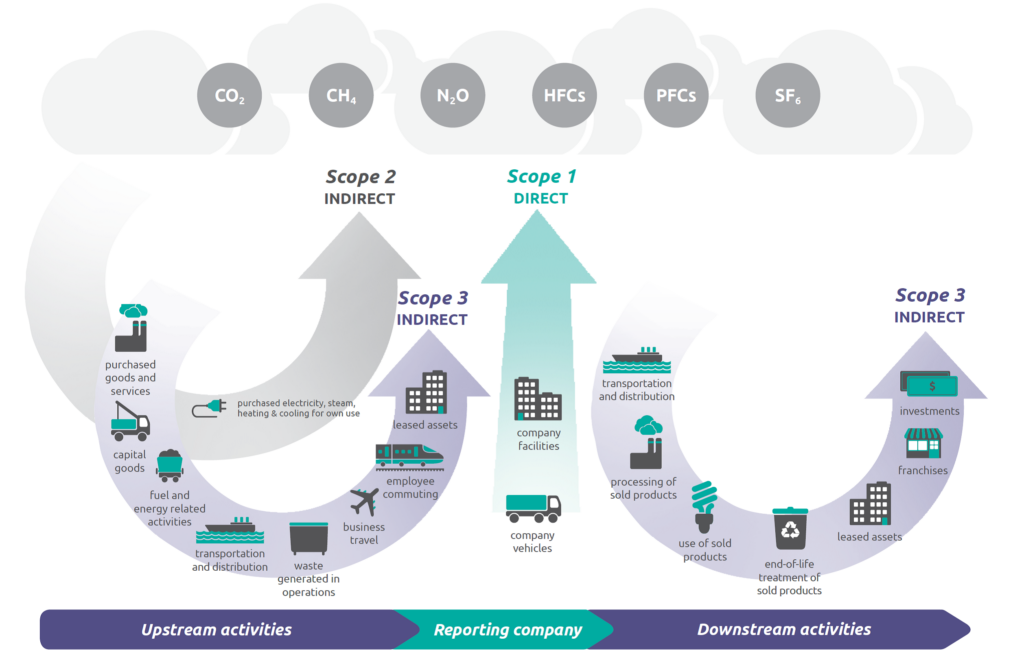
Buildings are where educational institutions have the most direct control over their emissions, and HVAC is the largest single lever within buildings. Geothermal directly addresses Scope 1 emissions by eliminating on-site combustion from the HVAC system, and contributes to Scope 2 reductions by cutting electrical demand for heating and cooling by 40 to 70% compared to conventional electric systems. For universities reporting under GHG Protocol frameworks or working toward LEED or ENERGY STAR certification, geothermal produces the kind of measurable, verifiable impact that sustainability reports and accreditation reviews require.
Educational institutions that invest in geothermal are also creating living examples of sustainable infrastructure that students can engage with directly. Engineering, environmental science, and sustainability programs benefit from having operating geothermal systems on campus as real-world learning assets.
Thermal Energy Networks: The Campus-Scale Opportunity
For universities and larger K-12 campuses with multiple buildings, geothermal becomes even more compelling at the campus scale through thermal energy networks. Rather than installing independent systems in each building, a shared underground loop or aquifer resource can serve multiple facilities from common infrastructure.
Campus thermal energy networks offer several advantages beyond what building-level systems provide. Heating and cooling loads can be balanced across buildings, using surplus heat from one facility to serve another. Infrastructure and equipment costs are shared, reducing the per-building capital investment. And the network can grow incrementally as the campus adds buildings or phases out aging conventional HVAC equipment, rather than requiring a single large upfront commitment.
For university campuses in the middle of long-term decarbonization plans, a thermal energy network built around geothermal is one of the most durable infrastructure investments available. The underground wellfield, once installed, serves the campus for 50-plus years, across multiple generations of heat pump equipment and building renovations.

Jefferson Elementary Geothermal Retrofit in Winona, MN
K-12 EDUCATIONAL FACILITY
Frequently Asked Questions
Can a public school district access the federal geothermal tax credit?
Yes. The IRA’s direct pay provisions allow tax-exempt entities, including public K-12 school districts and state universities, to claim the Section 48/48E Investment Tax Credit as a direct cash payment from the U.S. Treasury rather than as a tax offset. The current credit structure, preserved under the OBBBA signed in July 2025, provides a base rate of 6% scalable up to 30% with prevailing wage and apprenticeship requirements, plus bonuses for domestic content and energy community siting. The full structure holds through 2032 before beginning to phase down.
Does geothermal work for schools without large open land areas?
Yes. Groundwater-based geothermal systems, like those Darcy engineers, can deliver significantly more heating and cooling capacity per well than conventional closed-loop borehole configurations. This compact footprint makes geothermal viable on built-out school campuses and urban sites where open land for a conventional borehole field simply doesn’t exist. A free site assessment is the best way to determine whether a specific location has the hydrogeological conditions that make groundwater-based geothermal practical.
How does geothermal fit into a school district bond referendum?
Geothermal systems can be included in bond-funded capital programs like any other major mechanical infrastructure project. The financial case, including projected energy savings, federal ITC direct pay value, and reduced long-term maintenance costs, can be modeled and presented to voters as part of the referendum package. Many school districts find that geothermal’s long-term operating savings help offset the upfront capital cost in a way that strengthens the overall investment narrative for the community.
What does a geothermal installation look like for an occupied school?
Well drilling and exterior piping installation can generally proceed without requiring a school to be unoccupied, particularly when construction is phased during summers or school breaks. Darcy’s project team develops construction phasing plans that minimize disruption to school operations, coordinating site work around the academic calendar where possible. The mechanical room tie-in is typically the most schedule-sensitive phase and is planned to align with scheduled HVAC maintenance windows or summer shutdowns.
Can geothermal support a university’s carbon neutrality commitment?
Yes, and it is one of the most effective tools available for doing so. Geothermal eliminates Scope 1 HVAC emissions by removing on-site combustion from the heating system entirely, and reduces Scope 2 emissions by cutting HVAC electrical consumption by 40 to 70% compared to conventional electric alternatives. For universities working toward carbon neutrality targets, geothermal provides deep, structural reductions in building energy use that are measurable, verifiable, and durable over the long term.
How does a campus thermal energy network work?
A campus thermal energy network connects multiple buildings to shared geothermal infrastructure, typically a common wellfield or aquifer resource, through an underground distribution loop. Individual buildings connect to the loop and use local heat pump equipment to condition their spaces. The network allows thermal loads to be balanced across buildings, creates economies of scale in infrastructure costs, and can expand incrementally as the campus grows or phases out legacy HVAC systems. Darcy has experience designing both building-level geothermal systems and multi-building campus network configurations.
Start with a Free Site Assessment
Educational institutions evaluating geothermal for an upcoming capital project have a well-defined window to act while the full federal ITC is in place. The first step is understanding what a specific site can support.
Darcy’s site assessment is free, requires only a site address or coordinates, and delivers an initial geological picture of your project’s potential within one to two weeks. It’s the most efficient path from initial curiosity to a clear, informed evaluation.